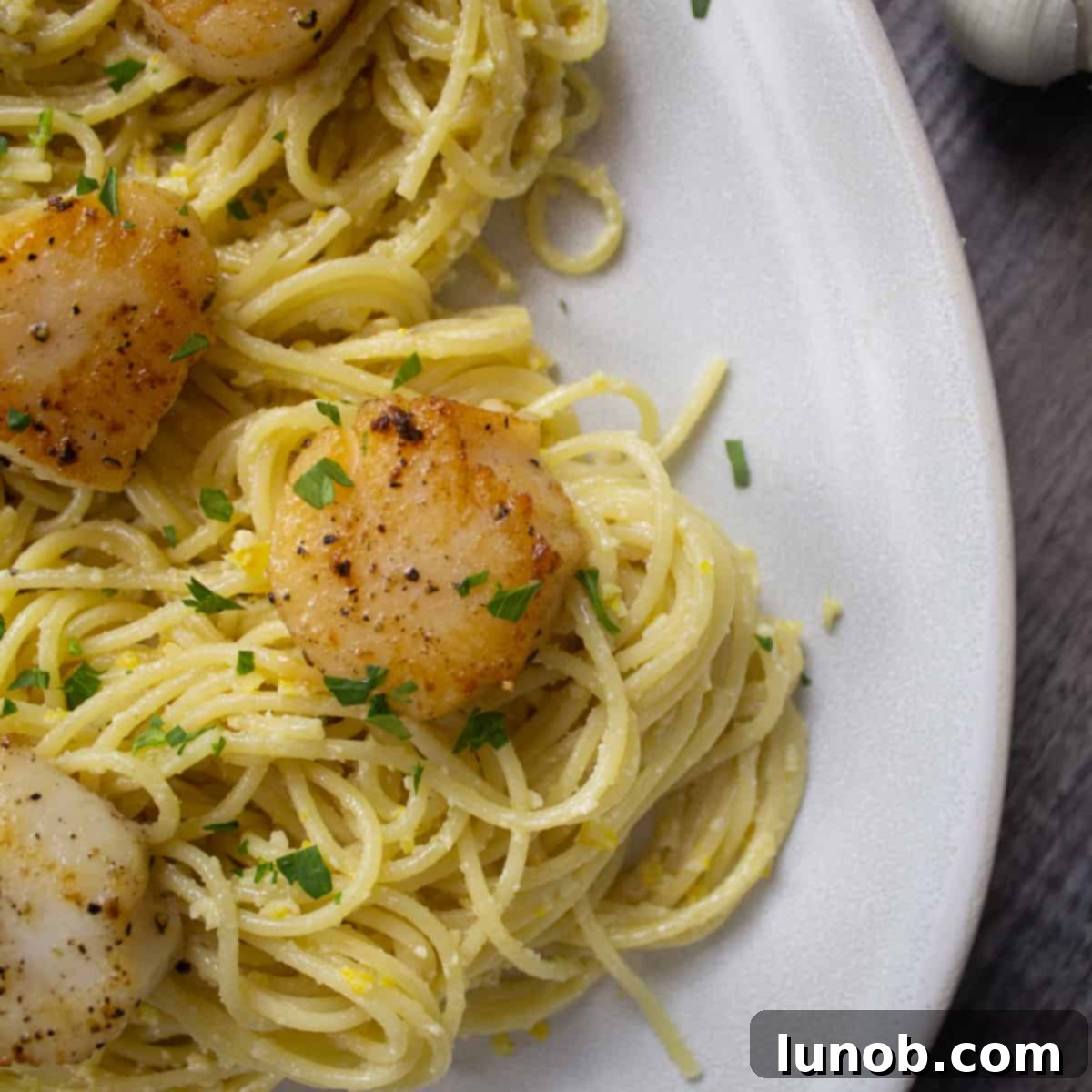
Lemon Pesto Spaghetti with Perfectly Seared Scallops: A Bright & Tangy Seafood Pasta Recipe
Prepare to delight your taste buds with this extraordinary twist on classic pesto: a vibrant and irresistibly creamy **Lemon Pesto Spaghetti**, beautifully complemented by succulent, expertly seared scallops. This quick-to-prepare yet elegant pasta recipe truly highlights the refreshing zest of fresh lemons and the delicate sweetness of perfectly cooked seafood, making it an ideal choice for a special weeknight dinner or entertaining guests.
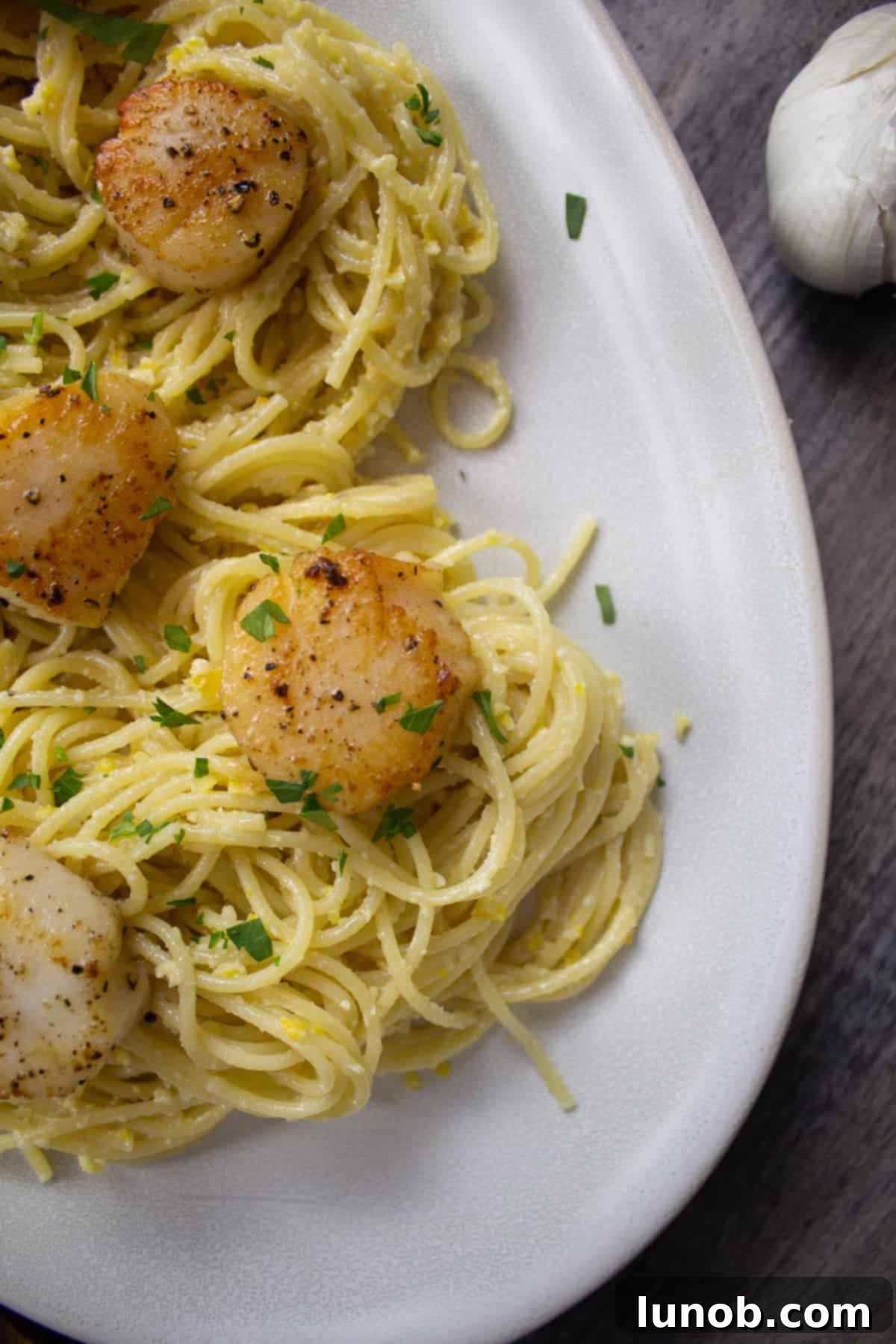
Unlike traditional basil-based pestos, this recipe features a unique tangy and creamy lemon pesto, meticulously crafted from gently boiled lemon rinds and rich Parmesan cheese. This innovative approach offers a surprisingly complex and delightful flavor profile that will instantly brighten any meal, challenging your perceptions of what pesto can be.
Craving more delicious seafood pasta dishes? Explore our irresistible Creamy Pesto Shrimp Pasta or the authentic Sicilian flavors of Busiate with Pesto Trapanese.
Table of Contents
- Why Lemon Pesto in Winter? A Bright Alternative to Basil
- Essential Ingredients and Smart Substitutions for Your Lemon Pesto
- How to Make the Creamy Lemon Pesto (Step-by-Step)
- Pro Tips for Perfect Pesto and Scallops
- Mastering the Art of Searing Scallops for a Golden Finish
- Frequently Asked Questions (FAQs)
- More Seafood Pasta Inspiration
- Lemon Pesto Spaghetti with Scallops Recipe Card
Why Lemon Pesto in Winter? A Bright Alternative to Basil
The inspiration for this unique lemon pesto spaghetti with scallops struck me the moment I encountered a recipe for lemon pesto. It was an instant revelation, promising a flavor profile unlike any traditional basil-based pesto. And indeed, it delivered! The resulting pesto is an incredibly **bright, zesty, and lusciously creamy** concoction, beautifully balanced with the savory nuttiness of Parmesan and lightly toasted cashews. This innovative pesto recipe proved to be the ideal companion for perfectly seared scallops, which remain one of my absolute favorite types of seafood.
One of the primary reasons this lemon pesto truly shines, especially during the colder months, is its ingenuity as a **perfect replacement for basil in the winter**. While we typically cultivate a bountiful harvest of basil in our backyard and preserve some for winter use, we inevitably run out. During these times, fresh basil becomes considerably more expensive and challenging to source, making it less accessible for everyday cooking. Lemons, however, are readily available year-round and offer that much-needed burst of sunshine and freshness. This recipe capitalizes on that availability, allowing you to enjoy vibrant, “summer-like” flavors even when the weather outside is dreary. The lemon rinds, often discarded, are ingeniously transformed into a key ingredient, minimizing waste and maximizing flavor.
The distinctive character of this pesto comes from carefully preparing the lemon peels. By gently boiling them, we effectively temper their inherent bitterness while simultaneously enhancing their natural, fragrant aroma. This process also softens the rinds, making them easier to process into a smooth, emulsified sauce. This step is crucial for extracting the pure essence of lemon, resulting in a sauce that is both bold in its citrusy notes and refined in its overall balance. When this exquisite pesto is tossed with al dente spaghetti and paired with sweet, caramelized scallops, the dish transcends a mere meal. It becomes a culinary experience that transports you to sunnier climes, proving that delicious, vibrant flavors are not limited by the season and can be enjoyed year-round.
Essential Ingredients and Smart Substitutions for Your Lemon Pesto
Crafting the perfect Lemon Pesto Spaghetti with Scallops begins with selecting high-quality ingredients. While the core components are fairly straightforward, understanding their individual roles and potential substitutions can significantly elevate your dish. Here’s a deeper dive into what you’ll need and how you can adapt the recipe to your preferences or what’s available in your pantry:
Lemons: The Zesty Heart of the Pesto
The star of this dish, lemons are used primarily for their rinds in the pesto. It’s essential to choose fresh, preferably organic, and unwaxed lemons since you’ll be using the peel directly. The main objective is to extract as much of the bright yellow zest as possible while carefully avoiding the bitter white pith, which lies just beneath the zest. The lemons’ tart and aromatic qualities are precisely what infuse this pesto with its distinctive “bright” and invigorating flavor.
Cashews: The Creamy, Mild Nut Base
Cashews are an excellent choice for this lemon pesto due to their inherent creamy texture and a relatively mild, buttery flavor profile. Their light color also helps to maintain the pesto’s beautiful, sunny yellow hue. However, you certainly have options if you prefer other nuts or have different varieties on hand. **Pistachios** would introduce a slightly greener tint and a subtly sweeter, richer flavor, though they tend to be a more expensive alternative. **Pine nuts** are the traditional choice for classic basil pesto and would offer a delicate, buttery crunch, but they are often the most costly option. For a nut-free alternative, you could consider using **sunflower seeds**, which provide a similar texture and a mild, earthy taste. Whichever nut you choose, lightly toasting them before blending is a crucial step that will significantly deepen their flavor and aroma, adding another layer of delightful complexity to your finished pesto.
Extra Virgin Olive Oil: The Uncooked Flavor Foundation
In a dish like this, where the sauce is predominantly “uncooked” and its flavor is central to the entire experience, the quality of your **Extra Virgin Olive Oil** is absolutely paramount. It’s not merely a binding agent; it’s a key flavor component that contributes significantly to the dish’s overall profile. I strongly recommend investing in a high-quality, cold-pressed extra virgin olive oil. Look for bottles that specify a “single olive varietal” if possible, as this often indicates an oil produced from just one type of olive, resulting in a more distinctive and nuanced flavor profile, ranging from fruity and mild to peppery and robust. A good olive oil will lend a smooth, rich mouthfeel and contribute significantly to the overall freshness and depth of your lemon pesto. Avoid generic, highly refined olive oils, as their flavor can be flat or even slightly off, which will detract from the delicate and bright lemon notes you’re aiming for.
Parmigiano Reggiano (Parmesan): The Savory Umami Kick
When it comes to cheese, there’s a significant culinary difference between true **Parmigiano Reggiano** and generic “Parmesan.” For optimal flavor, **Parmigiano Reggiano** is always the superior choice, offering a complex, nutty, salty, and slightly fruity taste with a pleasant granular texture. However, certain high-quality American-made parmesans can be decent substitutes if genuine Parmigiano Reggiano is unavailable or outside your budget. The most crucial tip here is to **always purchase a block of cheese** and grate it yourself, rather than opting for pre-shredded varieties. Pre-shredded cheeses often contain anti-caking agents and preservatives like cellulose or potato starch, which can significantly alter the flavor, prevent smooth melting, and give the pesto an undesirable gritty texture. Grating your own cheese ensures the purest flavor and the best possible texture for your creamy pesto. The freshly grated cheese melts beautifully into the warm pasta, creating a cohesive and satisfying sauce that coats every strand perfectly.
Garlic: Sweet & Aromatic
Roasted garlic is specified in this recipe for a very good reason: it mellows the sharp pungency of raw garlic, transforming it into a sweet, caramelized, and fragrant component. This subtle sweetness pairs wonderfully with the bright lemon notes of the pesto. If you’re short on time, you can use raw garlic, but consider using a little less and grating it very finely to avoid an overpowering raw garlic taste. Alternatively, a quick sauté in a pan can also soften its edge, though roasting provides the deepest flavor.
Kosher Salt & Freshly Ground Black Pepper: Essential Seasoning
These are fundamental for enhancing all the flavors in the dish. Always adjust to your personal taste, remembering that Parmigiano Reggiano also contributes significant salinity to the pesto. Freshly ground black pepper adds a subtle warmth and aromatic complexity.
Scallops: Delicate Seafood Perfection
Choose fresh, “dry” scallops whenever possible. “Wet” scallops are often treated with a sodium tripolyphosphate solution that causes them to absorb excess water, increasing their weight and making it nearly impossible to achieve a good sear. Dry scallops, on the other hand, will caramelize beautifully, developing a desirable golden-brown crust and a tender, sweet interior. Make sure to remove the small, tough side muscle from each scallop before cooking, as it can be chewy.
Spaghetti: The Perfect Canvas
While any long pasta shape works well with this pesto, spaghetti is a classic for a reason, providing the perfect canvas for the creamy sauce. Cook it al dente for the best texture, as it will continue to cook slightly when tossed with the hot pesto and reserved pasta water. Don’t forget to reserve some of that starchy pasta water – it’s a vital component for achieving a silky, emulsified sauce!
Avocado Oil and Unsalted Butter: For the Perfect Sear and Finish
Avocado oil has an exceptionally high smoke point, making it an ideal choice for searing scallops to achieve that coveted perfect golden crust without burning. Unsalted butter is added at the end of the scallop cooking process for basting, enriching the scallops with a luxurious flavor and promoting further caramelization. Using unsalted butter allows you to precisely control the overall sodium content of the dish.
How to Make the Creamy Lemon Pesto (Step-by-Step)
Crafting this vibrant lemon pesto is surprisingly simple, yet yields incredibly complex and refreshing flavors. Follow these detailed steps to create a sauce that will truly elevate your spaghetti and scallops.
Preparing the Pesto Components
Step 1: Toast the Cashews for Depth of Flavor.
Place your raw cashews in a small, dry pan over medium-high heat. Toss them frequently, ensuring even toasting, for approximately 5 minutes, or until they begin to develop a slight golden-brown color and release a wonderfully fragrant, nutty aroma. This crucial step deepens their flavor profile, adding a delightful complexity to the pesto that raw cashews would not provide. Once toasted, remove them from the pan and set aside on a plate to cool slightly.
Step 2: Roast the Garlic to Mellow its Pungency.
Preheat your oven to 400°F (200°C). Take two whole garlic cloves (still in their papery husks) and place them on a small baking pan. Drizzle them lightly with a tiny bit of olive oil. Roast in the preheated oven for about 15 minutes, or until the cloves are incredibly soft when squeezed and fragrant. Roasting transforms the sharp, pungent flavor of raw garlic into a sweet, mellow, and caramelized note, which beautifully complements the bright lemon. Once roasted, remove from the oven and allow them to cool completely, making them much easier to handle.
Step 3: Carefully Peel the Lemons to Capture Pure Zest.
Unlike traditional zesting where you grate the peel, for this lemon pesto, we are going to *peel* the lemons. Using a sharp knife or a high-quality vegetable peeler, carefully remove only the bright yellow outer layer of the lemon skin. The absolute goal is to leave as much of the white pith (the bitter spongy layer directly between the zest and the fruit) behind as you possibly can. This meticulous peeling ensures your pesto will be intensely bright and citrusy, completely devoid of any unwanted bitterness. You will need the peels from three average-sized, unwaxed lemons.
Step 4: Blanch the Lemon Peels to Soften and Reduce Bitterness.
Place the carefully peeled lemon rinds into a small pot and cover them generously with water. Bring the water to a rolling boil and cook the lemon peels for precisely 5 minutes. This boiling process is absolutely vital as it serves two key purposes: it softens the peels considerably, making them far easier to process into a perfectly smooth pesto, and it significantly reduces any potential bitterness that might otherwise be present in the rinds. After boiling, carefully remove the peels from the pot using a slotted spoon and strain any excess water. Let them cool for about 5 minutes.
Assembling the Lemon Pesto
Step 5: Blend the Pesto to a Creamy Perfection.
Begin by adding the cooled toasted cashews, the roasted garlic (simply squeeze the soft, sweet garlic out of their husks directly into the food processor bowl), and the blanched and cooled lemon peels to your food processor. Process these ingredients until they are thoroughly ground into a fine, crumbly mixture. Next, add half of the extra virgin olive oil and process again to start emulsifying the mixture. Then, incorporate the kosher salt and the freshly grated Parmigiano Reggiano, and process until well combined and the texture starts to come together. Finally, with the food processor running, slowly pour in the remaining olive oil in a steady, thin stream until the pesto fully emulsifies and reaches a soft, beautifully creamy, and smooth texture. The consistency should be reminiscent of traditional basil pesto but with a striking, vibrant yellow hue. Adjust the amount of olive oil as needed to achieve your desired consistency – some lemons are juicier than others, and different types of nuts can absorb varying amounts of oil.
Step 6: Integrate with Pasta Water for a Silky Sauce.
While your spaghetti is boiling to al dente perfection, it’s crucial to **save about ½ cup of the starchy pasta water**. This reserved pasta water is a chef’s secret weapon; its natural starches act as a powerful emulsifier, helping to create a wonderfully silky, cohesive sauce that clings perfectly to every strand of spaghetti. Once your spaghetti is cooked to your liking, drain it, but allow the saved pasta water to cool slightly (it doesn’t need to be cold, just not scalding hot). Add this reserved pasta water to the pesto in the food processor and give it one last quick pulse to fully incorporate and achieve that luxurious, flowing sauce consistency.
Step 7: Combine Pesto and Spaghetti.
Immediately after straining your al dente spaghetti, transfer it to a large serving bowl or back into the warm pot (off the heat). Pour the freshly made lemon pesto generously over the hot spaghetti. Using tongs, toss thoroughly until every single strand of spaghetti is completely and generously coated in the bright, creamy, and aromatic pesto. The residual warmth of the pasta will help the pesto to meld beautifully and release its full aromatic potential. Serve immediately, garnished with additional freshly grated Parmesan cheese or a sprinkle of fresh parsley, if desired.
Pro Tips for Perfect Pesto and Scallops
- **Pesto Consistency Control is Key:** While a ½ cup of high-quality olive oil is a good starting point for the pesto, remember that achieving the ideal consistency is paramount. Different food processors, the moisture content of your lemons, and the specific type of nuts used can all affect how much oil is truly needed. Don’t hesitate to adjust the amount of olive oil as necessary, adding a little extra slowly, until you achieve a smooth, creamy, and slightly runny texture that will beautifully coat your pasta strands. The pesto should not be too thick or pasty; it needs to be fluid enough to meld with the pasta.
- **The Butter Knife Scallop Flip Technique:** Many home cooks don’t possess a small enough, thin fish spatula designed for delicate tasks like flipping scallops. A simple yet effective **butter knife** is your secret weapon here! Its thin, flat edge can delicately slide underneath the scallop without tearing its perfectly seared crust. While doing so, gently hold the top of the scallop with your finger to stabilize it. This technique allows you to flip the scallop smoothly and precisely, ensuring both sides achieve an even, golden sear without sticking to the pan or damaging that coveted crust.
- **Avoid Overcrowding the Pan for Scallops:** This is an absolute golden rule for achieving a beautiful sear on your scallops. If you add too many scallops to the pan at once, the temperature of the pan will drop significantly and rapidly. Instead of searing and caramelizing, the scallops will merely steam in their own juices, resulting in a rubbery texture and absolutely no desirable golden-brown crust. Always work in small batches if necessary, ensuring there’s ample space between each scallop for proper caramelization and even cooking.
- **Pat Scallops Thoroughly Dry:** Before seasoning and searing, it is critically important to ensure your scallops are as dry as humanly possible. Any excess moisture on their surface will create steam when they hit the hot pan, preventing them from developing that desirable, delicious crust. Pat them firmly with several layers of paper towels, repeating the process multiple times, until their surface is completely dry to the touch.
- **Taste and Adjust Seasoning Religiously:** Always taste your pesto before mixing it generously with the pasta. Adjust the amount of kosher salt and freshly ground black pepper as needed. Remember, Parmigiano Reggiano is inherently salty, so add kosher salt incrementally and taste as you go. Similarly, a final pinch of salt on your perfectly seared scallops just before serving can truly make a huge difference, enhancing their natural sweetness.
Mastering the Art of Searing Scallops for a Golden Finish
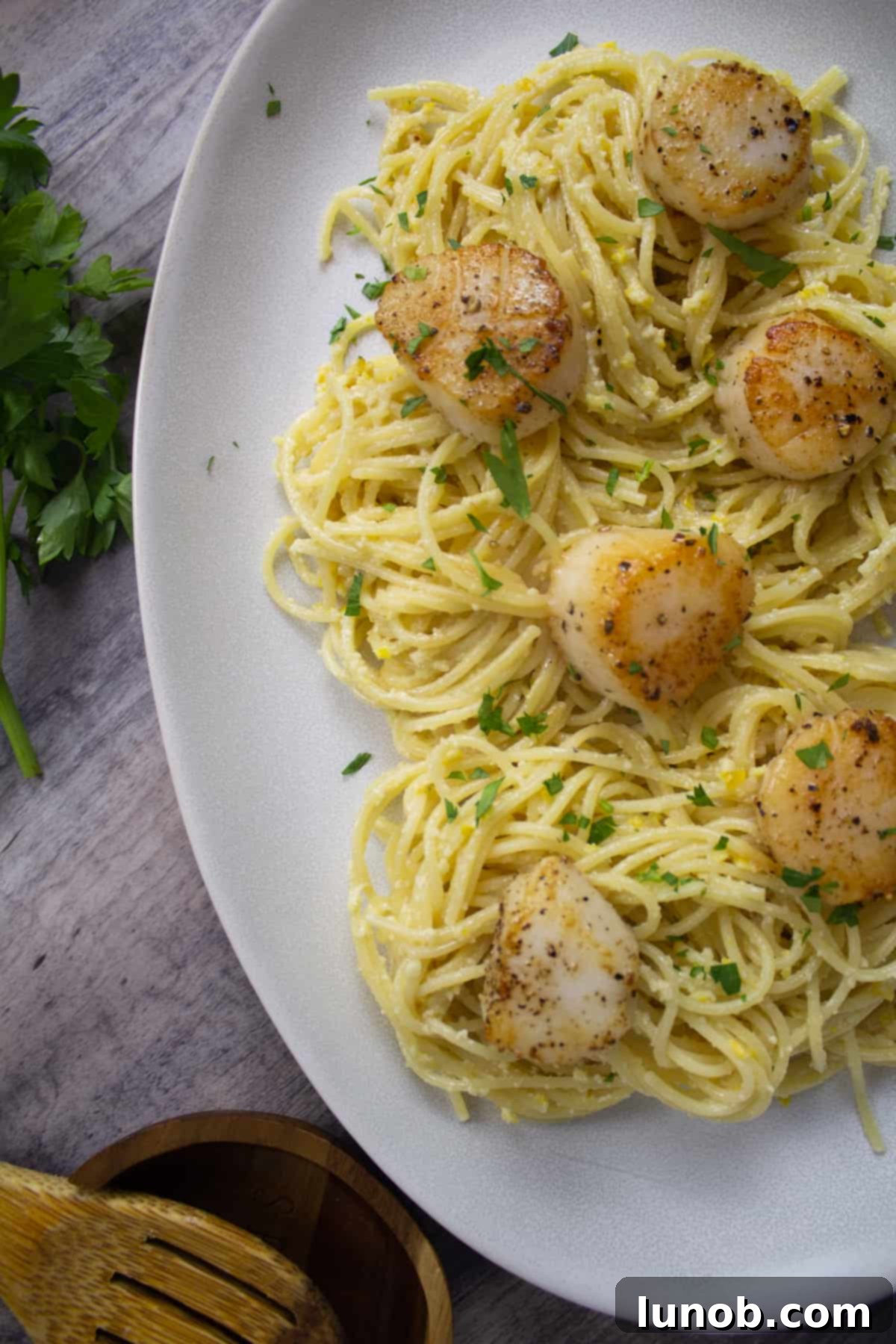
While the lemon pesto spaghetti is incredibly flavorful on its own, adding perfectly seared scallops elevates this dish to an impressive gourmet status. Many people are intimidated by cooking scallops, but they are surprisingly easy to master with a few key techniques. The ultimate goal is to achieve a beautiful, deep golden-brown crust on the exterior and a tender, moist, and almost translucent center. We keep the seasoning simple for the scallops, allowing their natural sweetness to shine through and complement the bright, tangy pesto without overpowering it.
Preparing and Searing Your Scallops
Step 1: Proper Scallop Preparation – Dry and Seasoned.
Begin by meticulously removing the small, tough side muscle from each scallop. This muscle, often appearing as a slightly whiter, rectangular piece attached to the side, should peel off easily with your fingers. Discard it, as it tends to be chewy. Next, and this is absolutely crucial for achieving a perfect sear, thoroughly pat the scallops dry with paper towels. You want them to be as dry as possible to encourage caramelization and prevent steaming in the pan. Season both sides generously with kosher salt and freshly ground black pepper. Don’t be shy with the seasoning; it helps enhance their delicate, natural flavor.
Step 2: Achieving the Perfect Sear.
Place a heavy-bottomed pan, such as a cast iron skillet or a good quality stainless steel pan, over medium-high heat. Allow the pan to heat thoroughly for 2-3 minutes until it’s very hot. Add a tablespoon of avocado oil (or another high smoke point oil like grapeseed or canola oil) to the hot pan. The oil is ready when it begins to shimmer and ripple slightly, indicating it’s hot enough to create an instant, beautiful sear. Carefully add the seasoned scallops to the pan, one at a time, ensuring they are spread out and not touching each other. **Crucially, do not overcrowd the pan.** If you have many scallops, sear them in multiple small batches. Overcrowding will significantly lower the pan’s temperature and lead to steaming instead of searing, resulting in a rubbery texture and no desirable crust. Sear the first side for exactly 90 seconds. Resist the urge to move or peek at them during this time; allow the caramelization process to work its magic undisturbed. After 90 seconds, use a butter knife (as suggested in our pro tips) or a very small, thin spatula to carefully flip each scallop.
Step 3: Finishing the Scallops with Luxurious Butter Basting.
Once flipped, sear the second side of the scallops for another minute. This shorter cooking time is typically enough to cook them through while maintaining their tender, juicy interior. After one minute, reduce the heat slightly to medium-low, then add 2 tablespoons of unsalted butter and a crushed or thinly sliced clove of garlic to the pan. As the butter melts and foams, tilt the pan slightly and use a spoon to continuously baste the scallops with the fragrant butter and garlic mixture for about 1 minute. This basting step infuses them with rich, savory flavor and promotes further golden-brown perfection. Immediately remove the scallops from the pan to prevent any risk of overcooking, which can quickly make them tough.
Searing scallops may seem daunting at first glance, but it’s genuinely a lot simpler and more rewarding than most people think. Just remember the easy-to-follow **”90-60-Baste” rule:** 90 seconds of searing on the first side, 60 seconds on the second side, followed by a 60-second luxurious butter basting. Follow this straightforward method, and your scallops will come out perfectly golden-brown, tender, and incredibly delicious every single time, ready to crown your bright and flavorful lemon pesto spaghetti.
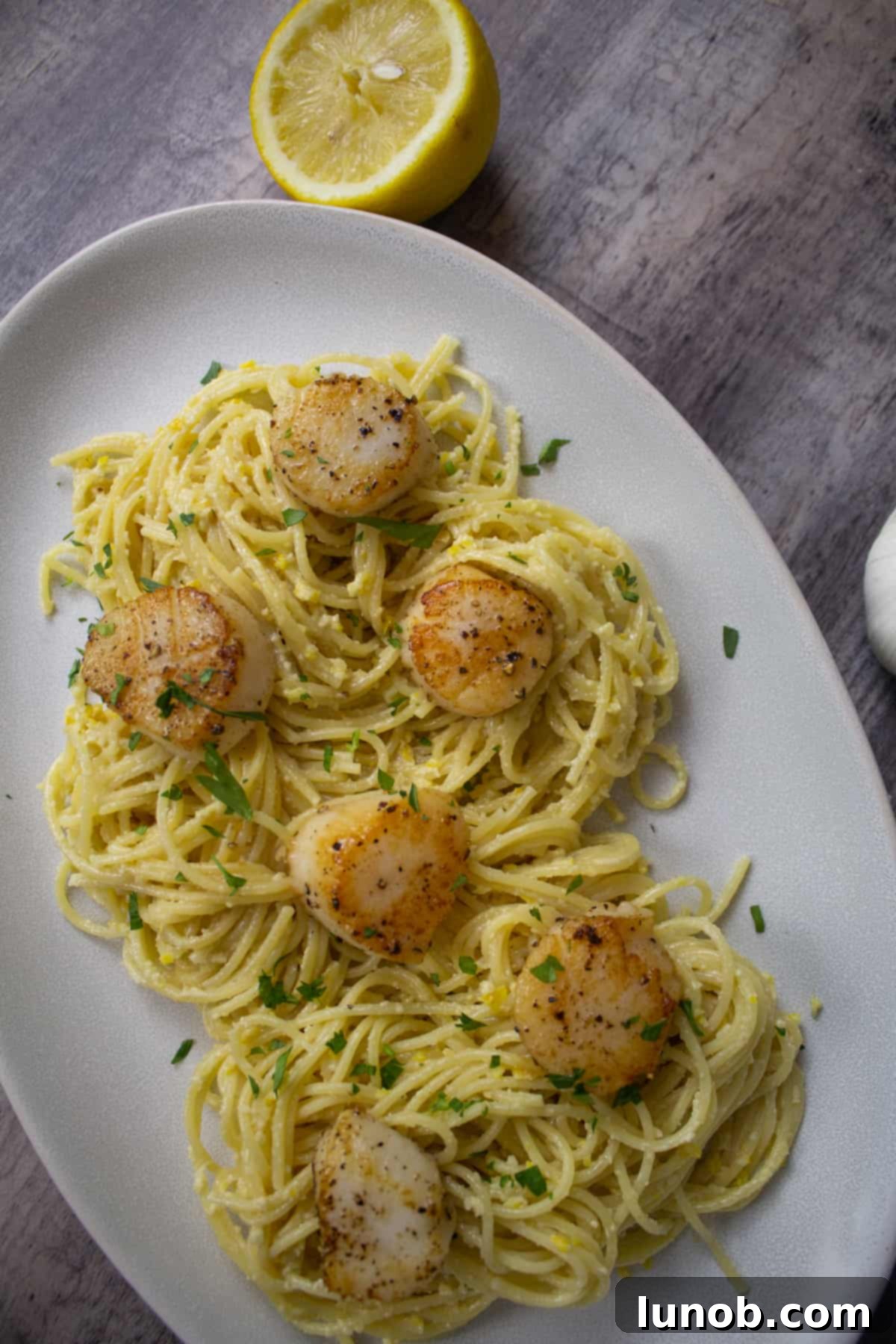
There’s something wonderfully ironic and delightful about using the word “bright” to describe lemon flavors, but it’s truly the most fitting descriptor for this entire dish. I particularly adore preparing and enjoying this recipe during the depths of winter because its vibrant, sun-kissed flavors instantly transport me to warmer, carefree summer days. It serves as a delightful culinary escape, offering a much-needed burst of freshness and zest precisely when you need it most. The harmonious combination of the tangy, aromatic lemon pesto and the sweet, perfectly seared scallops creates a balanced symphony of tastes and textures that is both deeply comforting and exhilaratingly fresh. It’s a dish that truly embodies the spirit of sunshine, no matter the season outside.
Frequently Asked Questions (FAQs)
Traditional lemon pesto is typically made from carefully peeled and blanched lemon rinds (yellow zest only, avoiding pith), lightly toasted cashews (or other nuts like pine nuts or pistachios), freshly grated Parmigiano Reggiano, good quality extra virgin olive oil, roasted garlic, and kosher salt. It’s a vibrant, tangy, and creamy alternative to classic basil pesto, offering a unique flavor profile that’s exceptionally versatile for pasta, chicken, fish, or roasted vegetables.
To reheat scallops effectively and prevent them from becoming tough and rubbery, the best method is a quick sauté. Heat a small amount of butter or olive oil in a pan over medium heat. Once hot, add the cooked scallops and gently sauté them for just 1-2 minutes per side, or until they are warmed through. It’s crucial not to overcook them, as this is the primary cause of a rubbery texture. You can also gently warm them in an oven preheated to 300°F (150°C) for approximately 5-7 minutes, covered loosely with foil to retain moisture.
For optimal taste and texture, it is highly recommended to store the cooked scallops separately from the lemon pesto spaghetti. Place the cooled scallops in an airtight container in the refrigerator. Store the lemon pesto spaghetti in another separate airtight container. Both components will need to be reheated separately to maintain their best qualities. Stored this way, they will keep fresh in the refrigerator for up to 3 days. When ready to serve, reheat the pasta and scallops according to the methods above, then combine and enjoy.
Yes, absolutely! Lemon pesto is an excellent candidate for making ahead of time. Prepare the pesto as directed in the recipe, but if you plan to store it for more than a day or two, consider adding the Parmigiano Reggiano cheese just before you’re ready to serve. This can sometimes help preserve the pesto’s fresh flavor and prevent any textural changes. Store the pesto in an airtight container in the refrigerator for up to 5-7 days. To prevent oxidation and maintain its vibrant yellow color, you can pour a thin layer of extra virgin olive oil over the surface of the pesto before sealing the container. Stir well before using.
While perfectly seared scallops are a fantastic and elegant choice, lemon pesto spaghetti is incredibly versatile and pairs well with a variety of other proteins. Excellent pairings include grilled or pan-seared chicken breast, flaky white fish like cod or halibut, tender shrimp, or even a vegetarian option featuring roasted asparagus, sautéed mushrooms, or sweet cherry tomatoes. The bright, tangy, and fresh flavor of the pesto complements a wide range of ingredients beautifully, allowing for diverse culinary creations.
Don’t be shy – we’d absolutely love to hear from you! Please leave a review below and share your thoughts on how you enjoyed this delightful recipe. Your feedback is incredibly valuable to us and helps other home cooks discover new favorites! For more culinary inspiration, behind-the-scenes glimpses, and everyday cooking tips, be sure to follow us on Instagram @vindelgiudice.
More Seafood Pasta Inspiration
- Shrimp Fra Diavolo with Linguine
- Linguine with Red Clam Sauce
- Linguine with Clams
- Garlic Anchovy Pasta with Toasted Breadcrumbs
📖 Lemon Pesto Spaghetti with Scallops Recipe Card
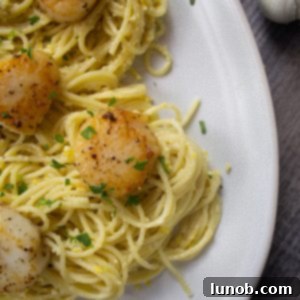
Lemon Pesto Spaghetti with Scallops
Vincent DelGiudice
Pin Recipe
Equipment
-
1 food processor
-
1 small saucepan (for lemon peels)
-
1 large pot (for spaghetti)
-
1 heavy-bottomed frying pan (for scallops)
-
1 small baking sheet (for roasting garlic)
Ingredients
For the Lemon Pesto Spaghetti:
- 1 lb spaghetti
- 3 lemons, peeled (yellow rind only)
- 2 cloves garlic, roasted (from Step 2 of pesto instructions)
- 1 cup freshly grated Parmigiano Reggiano (Parmesan)
- 1 teaspoon kosher salt, or to taste
- ½ cup cashews, lightly toasted
- ½ cup extra virgin olive oil, plus more as needed
- ½ cup reserved pasta water
For the Seared Scallops:
- 1 lb large, dry scallops, side muscle removed
- Kosher salt and freshly ground black pepper
- 1 tablespoon avocado oil (or other high smoke point oil)
- 2 tbsp unsalted butter
- 1 clove garlic, smashed or thinly sliced
Instructions
For the Lemon Pesto:
-
To prepare the lemon peels, use a sharp knife or vegetable peeler to carefully remove only the yellow zest from 3 lemons, ensuring to avoid as much of the white pith as possible. Place the lemon peels in a small pot with water, bring to a rolling boil, and boil for exactly 5 minutes. This crucial step softens the peels and significantly reduces any potential bitterness. Drain the peels well and let them cool for 5 minutes.
-
(Optional, but highly recommended for enhanced flavor) In a small, dry pan, toast the ½ cup of cashews over medium-high heat for about 5 minutes, stirring frequently, until they are lightly browned and incredibly fragrant. Set them aside to cool completely.
-
Preheat your oven to 400°F (200°C). Place 2 whole garlic cloves (still in their husks) on a small baking sheet and drizzle lightly with olive oil. Roast in the oven for 15 minutes, or until soft. Let them cool, then squeeze the soft, caramelized garlic from their husks.
-
In a food processor, combine the cooled lemon peels, toasted cashews, roasted garlic, 1 cup freshly grated Parmigiano Reggiano, and 1 teaspoon kosher salt. Process until all ingredients are thoroughly ground and well mixed. Then, with the processor running on low, slowly add ½ cup of extra virgin olive oil in a steady stream until the pesto becomes smooth, creamy, and beautifully emulsified. Adjust the amount of olive oil as needed to achieve your desired consistency.
-
Cook 1 lb spaghetti in a large pot of generously salted boiling water according to package directions until it reaches an al dente texture. Before draining the pasta, be sure to reserve ½ cup of the starchy pasta water.
-
Add the reserved pasta water to the pesto in the food processor and pulse one last time to create an even silkier, beautifully emulsified sauce that will cling perfectly to the spaghetti. Drain the spaghetti and immediately transfer it to a large serving bowl. Pour the freshly prepared lemon pesto over the hot spaghetti and toss thoroughly until every strand is fully coated. Set aside while you prepare the scallops.
For the Seared Scallops:
-
Prepare 1 lb large, dry scallops by removing the tough side muscle (a small, slightly whiter piece that should peel off easily). Pat them thoroughly dry with paper towels – this is crucial for a good sear. Season both sides liberally with kosher salt and freshly ground black pepper.
-
Heat 1 tablespoon avocado oil (or other high smoke point oil) in a heavy-bottomed frying pan over medium-high heat until it is shimmering and very hot. Carefully place the seasoned scallops in the hot pan, ensuring not to overcrowd it (work in batches if needed to maintain high heat). Sear for exactly 90 seconds per side until a deep golden-brown crust forms.
-
Carefully flip the scallops using a butter knife or a very small spatula. Sear on the opposite side for 1 minute.
-
Add 2 tablespoons of unsalted butter and 1 smashed garlic clove to the pan. Reduce the heat slightly to medium-low. Tilt the pan and use a spoon to continuously baste the scallops with the melted, fragrant butter and garlic mixture for about 1 minute. Immediately remove the scallops from the pan to prevent any overcooking.
-
Serve the perfectly seared, golden-brown scallops immediately over the bright and flavorful lemon pesto spaghetti. Garnish with a sprinkle of fresh parsley or additional lemon zest, if desired. Enjoy this exquisite and quick gourmet meal!
Notes
- I always suggest using a **butter knife** to delicately flip scallops because most people don’t have a small enough, thin fish spatula designed for this purpose. The butter knife’s thin edge will gently get under the scallop while you can hold your finger on top to stabilize it. This technique allows you to flip the scallop over without ripping it off the pan, preserving that beautiful sear.
- I listed a ½ cup of olive oil as a guideline for the pesto, but remember to adjust the amount as necessary when processing to achieve a smooth, creamy, and slightly runny texture. The ideal consistency is one that coats the pasta beautifully without being too thick or dry.
- For the absolute best flavor and texture in your pesto, always strive to use **freshly grated Parmigiano Reggiano** instead of pre-shredded parmesan. Pre-shredded varieties often contain anti-caking agents (like cellulose) that can affect the pesto’s smoothness, texture, and even its authentic taste.
- Do not skip the step of **toasting the cashews**! This seemingly small step makes a significant difference, adding a wonderful depth of nutty flavor and aroma that greatly enhances the overall complexity of the lemon pesto.