
Authentic Sicilian Eggplant Caponata: A Deliciously Easy Italian Appetizer
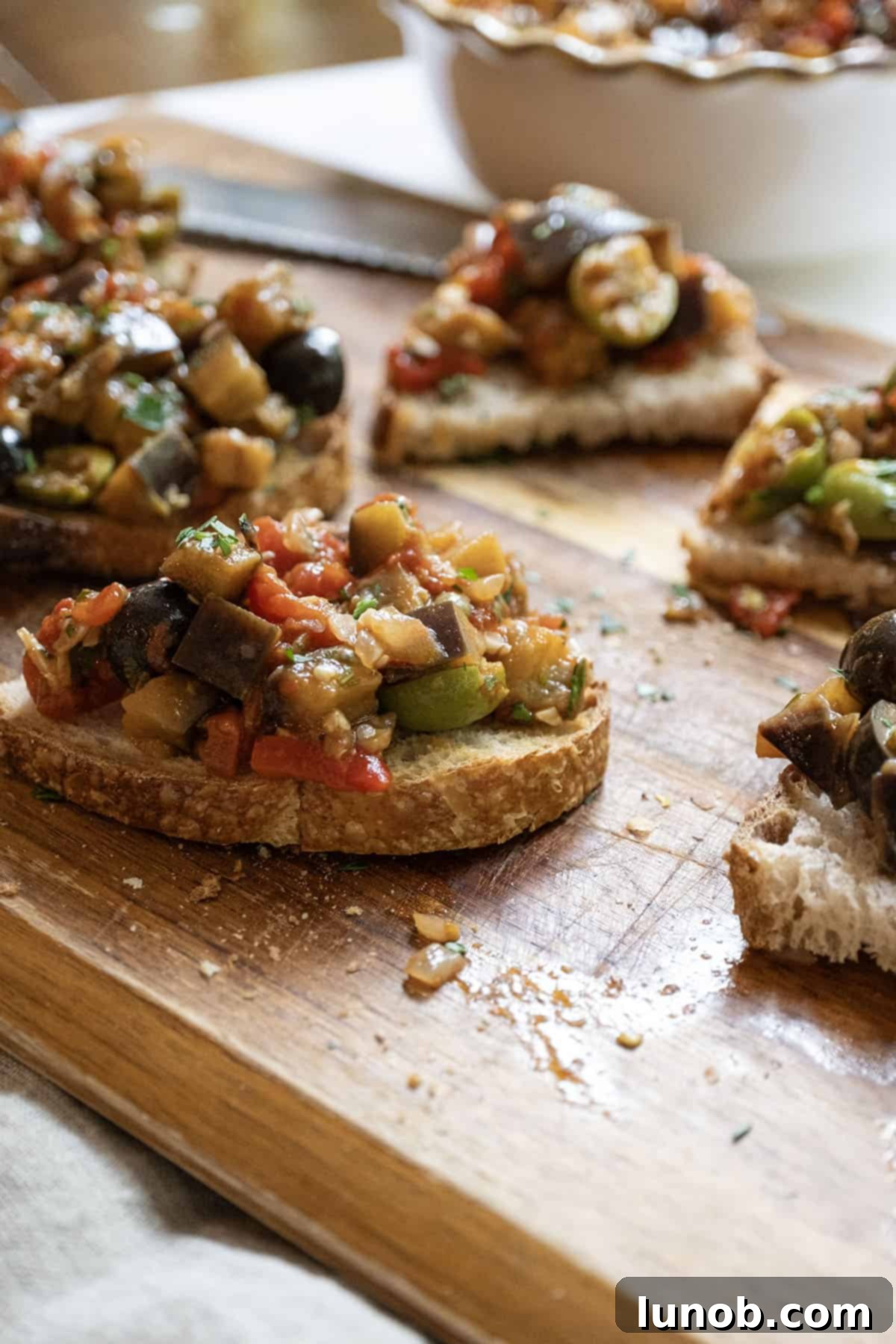
Prepare to delight your taste buds with Eggplant Caponata, a truly sensational Italian appetizer that transforms humble ingredients into an explosion of flavor. This classic Sicilian dish, rich with marinated eggplant and ripe tomatoes, perfectly complemented by an array of savory olives, tangy capers, aromatic garlic, and sweet onions, promises to be the most addictive snack on any table. Whether spread on crunchy crostini, hearty toast, a fresh sandwich, or crisp crackers, its vibrant flavors and satisfying texture will steal the show.
There’s an undeniable charm in gathering around a table, savoring the rich medley of caponata on perfectly toasted crostini, perhaps alongside other Italian delights like Italian Stuffed Artichokes. It’s more than just food; it’s an experience, a journey to the heart of Sicilian culinary tradition, where every bite tells a story of sunshine, robust flavors, and shared moments.

If you’re someone who appreciates versatile and delicious toppings for your crostini, you’ll also love our Spiced Apple Chutney, the savory Marinated Eggplant and Onion, or the incredibly simple yet satisfying EASY Ricotta Bruschetta. Each offers a unique flavor profile, but Caponata holds a special place with its distinctive agrodolce (sweet and sour) balance that truly sets it apart.
This recipe is designed to be straightforward and rewarding, making it accessible for home cooks of all skill levels. With minimal effort, you can create a sophisticated and flavorful dish that’s perfect for entertaining or simply enjoying as a gourmet snack. Its ability to be prepared in advance also makes it an ideal choice for busy hosts or meal prepping.
[feast_advanced_jump_to]
What is Eggplant Caponata? A Sicilian Classic Explained
Eggplant Caponata, sometimes affectionately referred to as Caponatini depending on the size of the eggplant pieces, is a celebrated Sicilian appetizer consisting of a cooked and seasoned salad primarily featuring marinated eggplant and tomatoes. The traditional recipe includes a harmonious blend of olives, onions, garlic, and capers, all simmered together to create a rich, complex, and utterly satisfying relish. What truly defines Caponata is its distinctive agrodolce flavor profile – a delightful balance of sweet and sour notes that comes from the addition of vinegar and a touch of sweetness, usually honey or sugar.
This vibrant dish is most commonly served chilled or at room temperature as a topping for crispy toast or elegant crostini. Beyond being a delightful standalone appetizer, Caponata proves incredibly versatile as a condiment or spread. Imagine swapping out the lox in our Mascarpone Toast with Lox for a generous spoonful of Caponata, transforming it into a unique and delicious Italian-inspired bite. It’s also fantastic tucked into sandwiches, elevating even the simplest lunch into a gourmet experience.
Often dubbed the “Italian Salsa,” Caponata is the perfect recipe to serve when friends and family are gathered around the kitchen table, eagerly awaiting dinner. Its irresistible taste means bowls quickly become empty, a testament to its universal appeal. Just like our Bourbon Candied Pecans, having little snacks like this on hand is a wonderful way to keep everyone happy and engaged before the main meal. Our family has particularly fond memories of enjoying this on Fridays during Lent, often alongside a comforting Peppers and Eggs Sandwich, making it a cherished part of our culinary traditions. It’s a dish that brings people together, sharing stories and creating new memories with every delicious bite.
Key Ingredients and Smart Substitutions for Caponata
Crafting the perfect Eggplant Caponata begins with understanding each ingredient and its role in achieving that signature Sicilian flavor. Here’s a closer look at the components and how you can adapt them to your pantry and preferences.
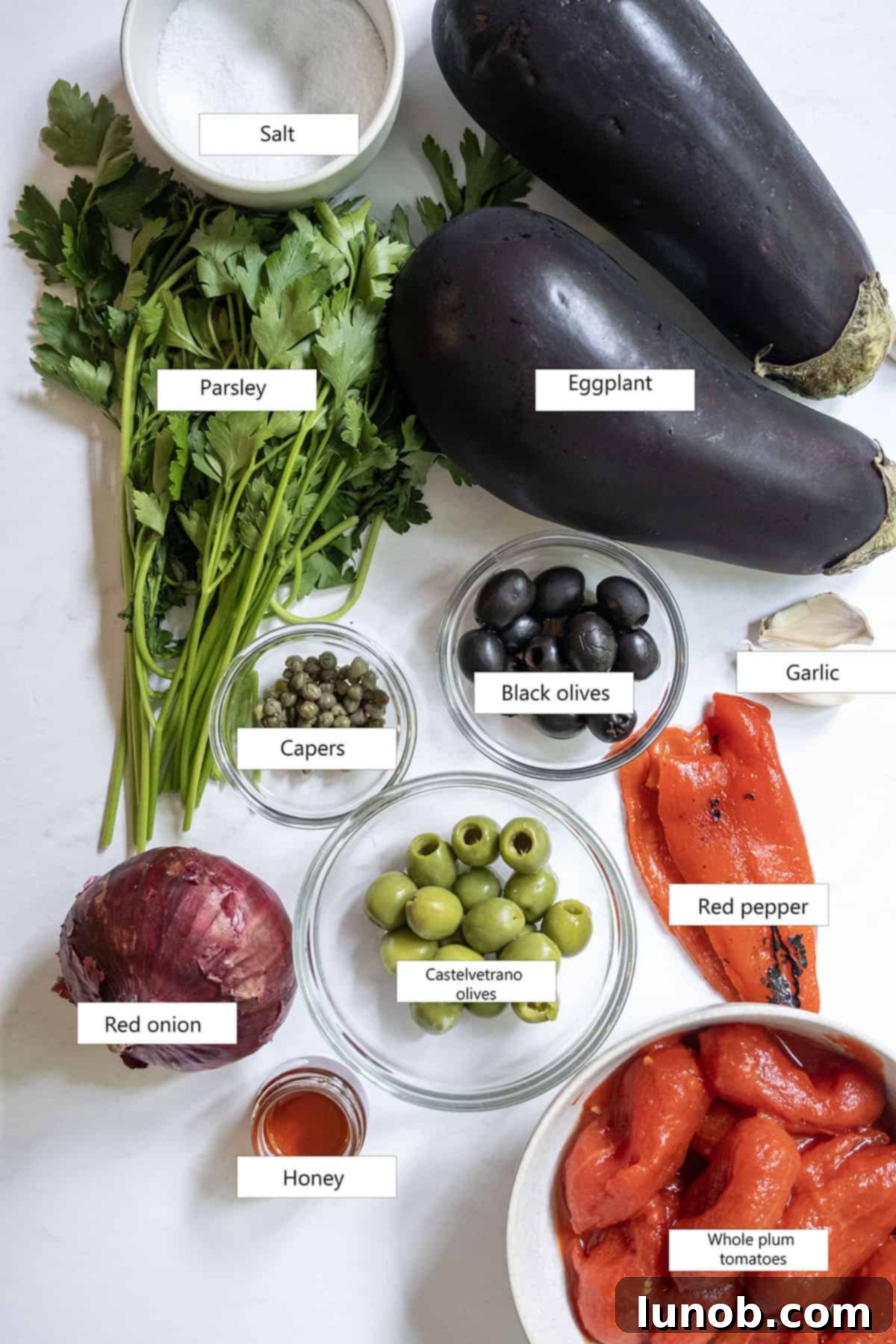
Whole Plum Tomatoes: For this Caponata recipe, I prefer using whole canned plum tomatoes. While the entire can is used, I make sure to drain as much of the liquid as possible before crushing them. This approach ensures a chunky, rustic texture that’s characteristic of authentic Caponata, rather than a saucy consistency. Don’t discard the strained tomato juice; it can be saved in a Ziploc bag in the freezer for future use in soups or sauces, minimizing waste and maximizing flavor.
Red Onion: Red onions contribute a mild sweetness and beautiful color to the dish. However, if red onions are not available, you can easily substitute them with yellow onions or Vidalia onions. Yellow onions offer a stronger, more pungent flavor, while Vidalia onions provide a sweeter, milder profile, both working well to build the aromatic base of the Caponata.
Olives: My personal choice for this recipe includes a delightful combination of Castelvetrano and black olives. Castelvetrano olives are known for their bright green color, buttery texture, and mild, fruity flavor, while black olives (such as Kalamata or Gaeta) offer a richer, more briny taste. Feel free to choose your favorite variety or mix different types of olives to customize the flavor. Just ensure they are pitted and roughly chopped if large.
Eggplant: The star of the show! For the best Caponata, I chop the eggplant into fairly small, uniform pieces. This is a key differentiator, as Caponatini typically features smaller eggplant chunks than a more rustic Caponata. After chopping, it’s crucial to salt the eggplant pieces and let them sit for about 20 minutes. This process draws out excess moisture and bitterness, preventing the eggplant from becoming soggy and absorbing too much oil during cooking. Once salted, pat them thoroughly dry with a paper towel before proceeding to the next step. This small effort makes a significant difference in the final texture and taste of your Caponata.
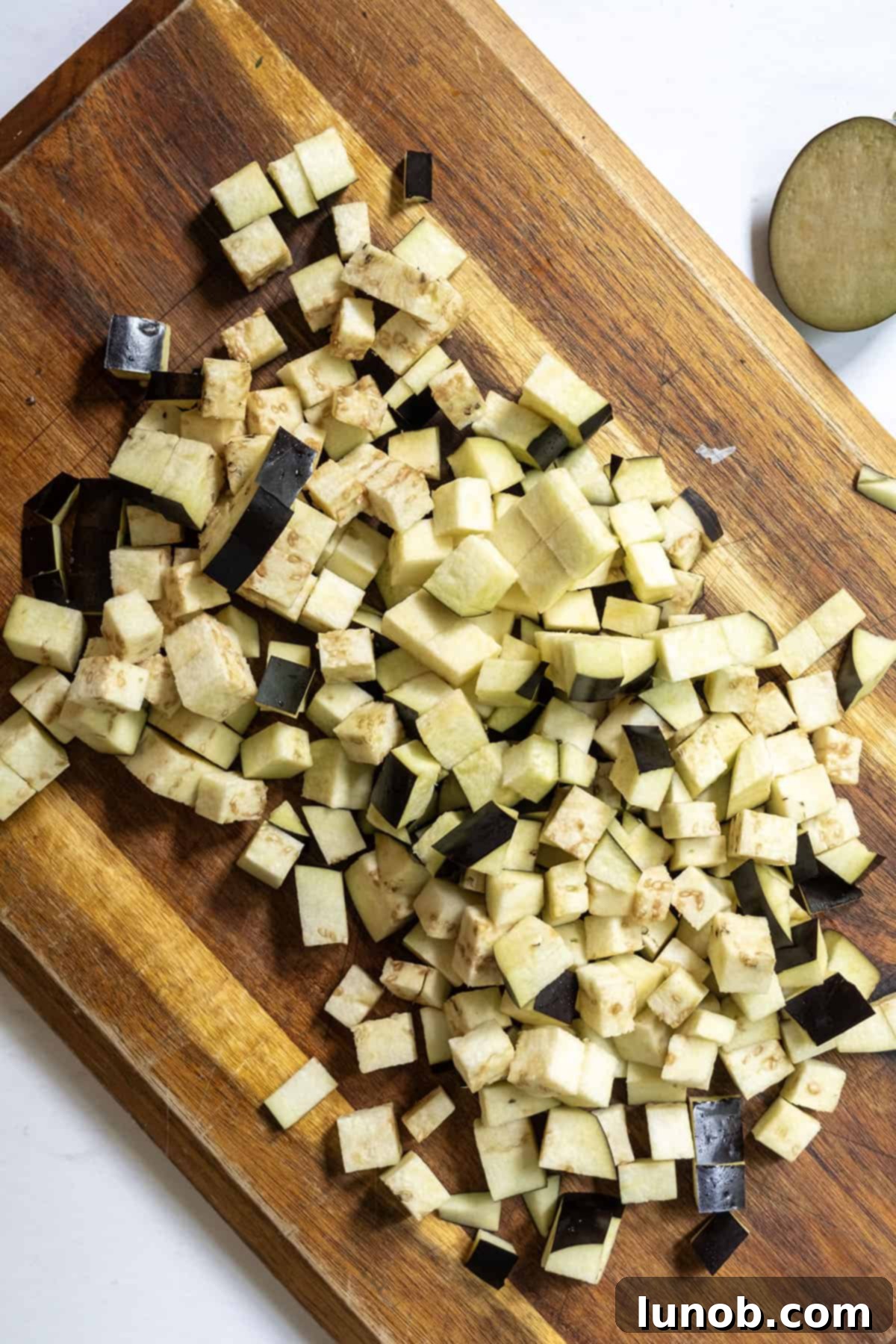
Capers: These tiny, tangy flower buds are indispensable to Caponata, providing a burst of briny, salty flavor that cuts through the richness of the other ingredients. I use brined capers, but if you have salt-packed capers, remember to rinse them thoroughly before use to remove excess salt.
Red Wine Vinegar & Honey: These two ingredients are critical for achieving Caponata’s characteristic agrodolce balance. The red wine vinegar adds a delightful tang and brightness, while the honey provides a subtle sweetness to round out the flavors. Adjust the quantities to your personal preference for a more or less pronounced sweet and sour profile.
Roasted Red Pepper: The addition of roasted red pepper introduces a smoky sweetness and a tender texture, adding another layer of complexity to the Caponata. You can roast your own bell peppers or use good quality jarred roasted red peppers for convenience.
*Please see the recipe card below for precise measurements and additional information on all ingredients.
Step-by-Step Guide to Making Perfect Eggplant Caponata
Making Eggplant Caponata is an incredibly rewarding and surprisingly straightforward process. One of its best qualities is that it’s meant to be served cold or at room temperature, making it a perfect make-ahead dish. You can prepare it a day or two in advance of a party or gathering, allowing the flavors to meld and deepen, resulting in an even more delicious appetizer!
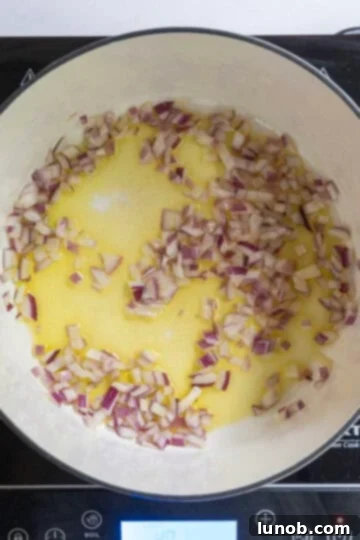
Step 1: Build the Aromatic Base. Begin by heating a generous amount of olive oil in a large saucepan over medium heat. Add the finely chopped red onion and sauté for 6-8 minutes, or until the onion becomes beautifully softened and translucent. Avoid browning them too much at this stage; we’re aiming for sweetness.
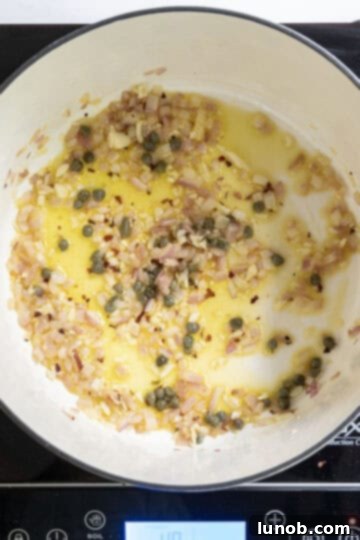
Step 2: Infuse with Flavor. Introduce the minced garlic and crushed red pepper to the softened onions. Continue to sauté for another 2-3 minutes until the garlic is fragrant, being careful not to burn it. Then, add the capers and stir everything together, allowing their briny essence to mingle with the other aromatics.
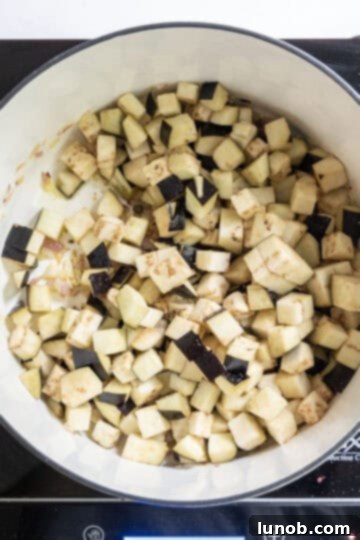
Step 3: Cook the Eggplant. Add the pre-salted and patted-dry eggplant pieces to the saucepan. Season generously with salt and stir well to combine all ingredients. Continue to sauté the eggplant for 5-8 minutes, stirring occasionally, until it begins to soften and take on a light golden-brown color. The eggplant should be tender but still hold its shape.
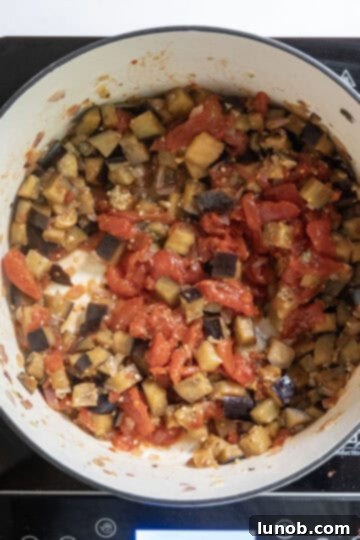
Step 4: Incorporate Tomatoes and Vinegar. In a separate bowl, crush the drained whole plum tomatoes with your hands or a fork. Add these crushed tomatoes to the pan along with the red wine vinegar. Stir thoroughly until all the ingredients are well combined, ensuring the tomatoes break down slightly to release their juices.
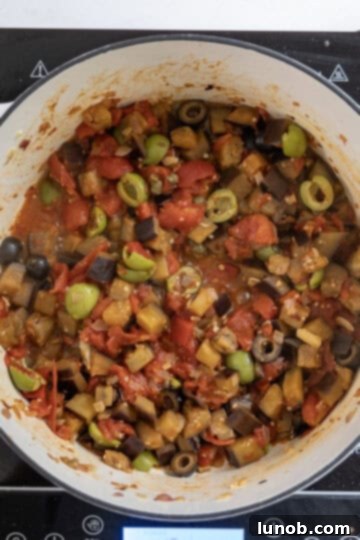
Step 5: Simmer to Perfection. Allow the mixture to come to a gentle simmer. There should be a slight amount of liquid at the bottom of the pan to prevent sticking. Now, add the honey, your chosen olives, and the chopped roasted red peppers. Reduce the heat to low and let the Caponata simmer for approximately 20 minutes, stirring often. This simmering period is crucial for the flavors to meld and deepen, creating the rich, complex taste characteristic of Caponata.
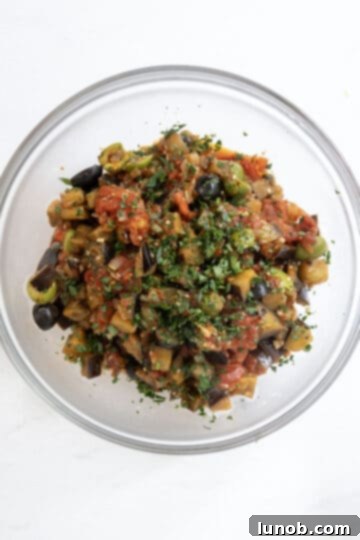
Step 6: Finish and Serve. Once simmered, remove the Caponata from the heat and transfer it to a serving bowl. Stir in the fresh chopped parsley. Cover the bowl and let it cool completely to room temperature, or refrigerate it until thoroughly chilled. Remember, Caponata is best served at room temperature or cold! This allows its full spectrum of flavors to shine through beautifully.
Serve your homemade Caponata generously over crisp toast, delicate crostini, or even as a vibrant side dish. It pairs wonderfully with many other Italian classics like Zucchini alla Scapece and Marinated Eggplant and Onion, both fantastic served over crusty bread. Caponata is not just an appetizer; it’s a celebration of Mediterranean flavors that will leave a lasting impression on anyone who tastes it.
Pro-Tips for Perfect Eggplant Caponata
Achieving a truly exceptional Eggplant Caponata involves a few key techniques. Follow these expert tips to ensure your dish is flavorful, perfectly textured, and consistently delicious every time:
- Mind the Onion: When sautéing the red onion, pay close attention to the heat. If you notice the edges starting to burn, immediately reduce the temperature. We want the onions to soften and sweeten, not to caramelize or become bitter. A gentle sauté is key for a delicate flavor base.
- Prevent Burning During Simmering: Once all the ingredients are in the pan and simmering, it’s vital to keep a close eye on the liquid level. If the sauce completely evaporates, the Caponata can easily scorch and burn at the bottom of the pan. Be prepared to add a tablespoon or two of water, vegetable broth, or even a splash more red wine vinegar if the mixture appears too dry, ensuring a gentle, even simmer.
- Serve it Right: Caponata is designed to be a topping for toast, crostini, or a vibrant component of an antipasto platter. For the best flavor and texture, it should always be served either cold or at room temperature. This allows the various flavors to fully develop and meld, giving you the authentic agrodolce experience. Avoid serving it warm directly off the stove, as the flavors won’t be as pronounced.
- Salting Eggplant is Essential: Don’t skip the step of salting the chopped eggplant and letting it sit. This process (known as “degorging”) draws out excess moisture and any potential bitterness from the eggplant. It also helps the eggplant absorb less oil during cooking, resulting in a less greasy and more tender final product. Always pat it very dry after salting.
- Taste and Adjust: The beauty of Caponata is its balance of sweet and sour. Before serving, taste the finished dish and adjust the seasoning. You might want a little more honey for sweetness, extra red wine vinegar for tang, or another pinch of salt to brighten all the flavors.
Eggplant Caponata: Your Questions Answered
Eggplant Caponata is incredibly versatile and pairs well with a variety of dishes. Traditionally, it’s served as an appetizer alongside slices of crusty sourdough bread, toasted baguette slices (crostini), or plain toast. For a more substantial meal, it makes an excellent topping for an Italian Chicken Cutlet sandwich or even an Italian Breakfast Sandwich. Beyond sandwiches, consider serving it as a side dish with grilled fish or roasted meats, using it as a vibrant pasta sauce, or incorporating it into a larger antipasto platter with cheeses, cured meats, and other marinated vegetables. It’s truly best enjoyed as a delightful appetizer before dinner or as a light, flavorful lunch!
When stored properly in an airtight container in the refrigerator, Caponata will retain its freshness and flavor for a generous 5-7 days. In fact, Caponata is one of those wonderful dishes that often tastes even better the day after it’s made, as the flavors have more time to meld and deepen. This makes it an ideal recipe for advance preparation, perfect for entertaining or enjoying throughout the week. Ensure it’s fully cooled before refrigerating to maintain its quality.
Caponata is a traditional Sicilian dish, essentially a marinated eggplant and tomato relish. Its core ingredients typically include pan-fried or roasted eggplant, ripe tomatoes (often canned whole plum tomatoes), a flavorful blend of onions, garlic, and celery (though celery is sometimes omitted in modern recipes). Crucially, it features briny additions like olives and capers. The distinct “agrodolce” (sweet and sour) flavor comes from incorporating red wine vinegar and a touch of sweetness, usually honey or sugar. Some variations might also include pine nuts, raisins, or bell peppers, adding even more complexity and texture to this delicious Italian classic.
More Irresistible Italian Appetizers
If you loved this Eggplant Caponata, you’ll be thrilled to explore more delicious Italian appetizers from our collection. These recipes are perfect for entertaining, potlucks, or simply enjoying a taste of Italy at home:
- Italian Green Bean Salad
- Easy Italian Fried Green Tomatoes
- Baked Italian Stuffed Portobello Mushrooms
- Pepperoni Bread (Stromboli)
We hope you enjoy trying these authentic Italian flavors as much as we do! Your feedback means the world to us. Please leave a comment and a star rating below in the recipe card if you try our Caponata. We love hearing what you think of our recipes and seeing your creations! Feel free to tag us on Instagram @vindelgiudice when you share your delicious Caponata.
📖 Recipe

Eggplant Caponata
Vincent DelGiudice
Pin Recipe
Equipment
-
1 large saucepan
-
1 large bowl
Ingredients
- 1 large eggplant or 2 small eggplant, chopped
- 1 28 oz can whole plum tomatoes, drained
- ¼ cup olive oil
- ½ red onion, chopped
- 3 cloves garlic, minced
- 1 teaspoon crushed red pepper flakes
- ½ cup Castelvetrano Italian olives, pitted and halved
- ½ cup black olives, pitted and halved (e.g., Kalamata, Gaeta)
- 1 tablespoon capers, drained
- 1 roasted red pepper, chopped (from a jar or freshly roasted)
- 2 teaspoons salt, or to taste
- 3 tablespoons red wine vinegar
- 1 teaspoon honey (or sugar, to taste)
- 1 tablespoon fresh chopped parsley, for garnish
Instructions
-
In a large saucepan, heat the olive oil over medium heat. Add the chopped red onion and sauté for 6-8 minutes until it softens. Stir in the minced garlic and crushed red pepper flakes, cooking for another 2-3 minutes until fragrant. Finally, add the drained capers and stir to combine.
-
Add the salted and patted-dry eggplant pieces to the pan. Season with a pinch more salt and stir well until thoroughly combined. Sauté the eggplant for an additional 5-8 minutes, or until it starts to soften and lightly brown. In a separate bowl, crush the drained whole plum tomatoes. Add the crushed tomatoes to the pan along with the red wine vinegar, stirring until everything is well incorporated.
-
Bring the mixture to a gentle simmer. You should see a slight bit of sauce forming at the bottom of the pan. Stir in the honey, pitted olives (both Castelvetrano and black), and the chopped roasted red peppers. Reduce the heat to low and let the Caponata simmer for 20 minutes, stirring frequently to prevent sticking and allow the flavors to deepen and meld beautifully.
-
Remove the Caponata from the heat and transfer it to a clean bowl. Stir in the fresh chopped parsley. Cover the bowl and allow it to cool to room temperature, or refrigerate until thoroughly chilled. For the best flavor, Caponata should always be served at room temperature or cold!
Notes
- When sautéing the red onion, if you notice the edges burning, lower the temperature immediately to ensure they soften without over-browning.
- This dish is explicitly designed to be served as a topping for toast, crostini, or crackers. For optimal flavor and enjoyment, serve it either cold or at room temperature.
- During the simmering phase, keep a close watch on the Caponata. If the liquid completely evaporates, the dish can start to burn. Always be ready to add a little water or vegetable broth to maintain moisture.
- Don’t skip salting the eggplant! This crucial step helps draw out excess moisture and bitterness, resulting in a perfectly tender and less oily Caponata.
- For an extra layer of flavor and texture, consider adding 1/4 cup of toasted pine nuts or a handful of golden raisins during the last 10 minutes of simmering.