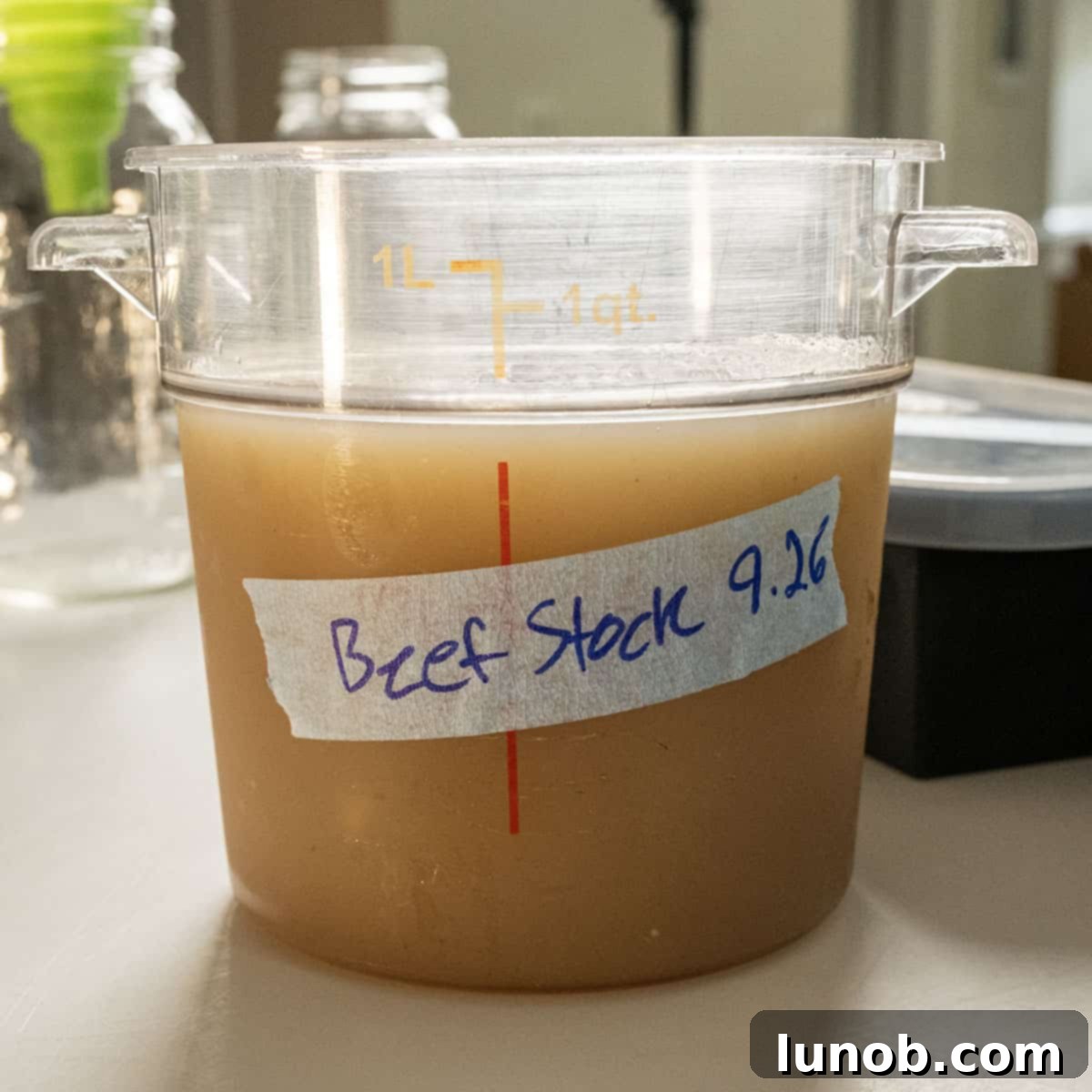
The Ultimate Guide to Crafting Rich, Flavorful Homemade Beef Stock from Scratch
A truly exceptional Homemade Beef Stock is the secret ingredient that can transform your favorite beef dishes from good to extraordinary. Far beyond what any store-bought alternative can offer, making your own stock allows you complete control over every nuance of flavor, ensuring a depth and richness that is simply unparalleled. Moreover, it empowers you to create a wholesome foundation for your cooking, free from the artificial additives, excessive sodium, and questionable ingredients often found in commercial products. This hands-on approach guarantees a healthier, more authentic, and undeniably more delicious result, elevating everything from hearty stews and robust gravies to delicate sauces and comforting soups.
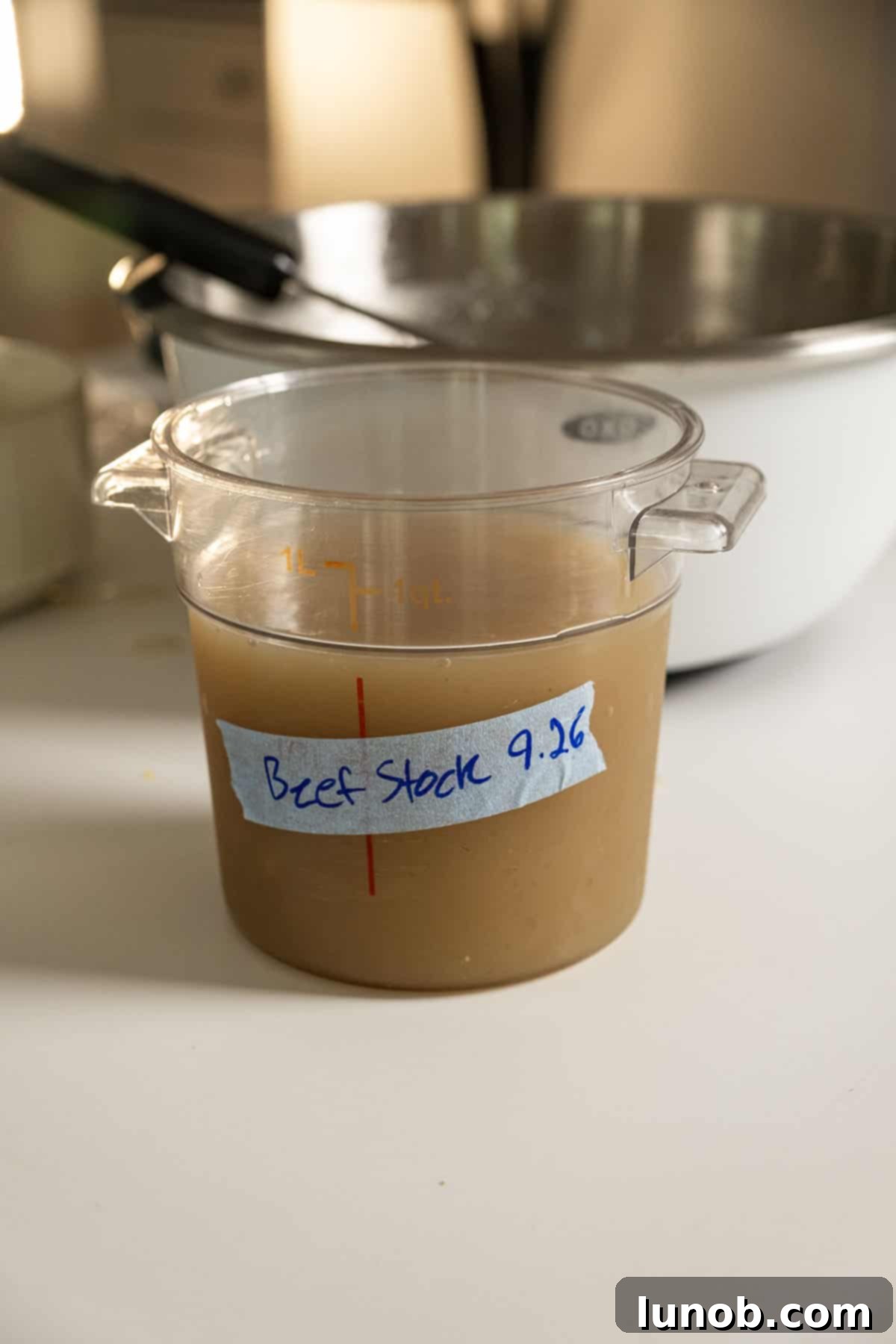
Once you experience the difference homemade beef stock makes, you’ll wonder how you ever cooked without it. Its rich, savory notes provide a robust backdrop that enhances other ingredients without overpowering them. This versatile liquid gold is perfect for a myriad of culinary applications. For instance, try it with a comforting bowl of Beef and Barley Soup with Mushrooms, where its deep flavor will meld beautifully with earthy mushrooms and tender beef. Alternatively, elevate your Tex-Mex night by using it in Dutch Oven Barbacoa Tacos, contributing to a succulent, slow-cooked meat that’s bursting with authentic taste. The possibilities are truly endless, making this recipe an essential skill for any home cook looking to infuse their meals with unparalleled taste and quality.
Why Homemade Beef Stock Truly Matters
Investing a little time in making your own beef stock yields immense dividends in flavor, health, and culinary control. Here’s why ditching the store-bought cartons and embracing homemade is a game-changer:
- Unrivaled Salt Content Control: Commercial beef stocks are notorious for their high sodium levels, which can make it incredibly challenging to season your dishes accurately. When you use homemade stock, which is typically prepared without any added salt, you retain complete control over the final saltiness of your food. This flexibility is crucial for recipes that require reduction, as salt content becomes more concentrated during cooking. It also caters beautifully to specific dietary needs or preferences, allowing you to build layers of flavor precisely as you desire without worrying about over-salting before you’ve even begun.
- Authentic Beef Flavor, Not Artificial: Many store-bought “beef” stocks are often concoctions of flavorings, colorings, and preservatives, with very little actual beef involved. This results in a one-dimensional, sometimes artificial taste that can undermine your cooking. Homemade stock, by contrast, is a pure extraction of real beef bones and meat, combined with fresh vegetables and herbs. This slow, gentle process coaxes out a complex, deeply savory, and authentic beef flavor that forms a genuine foundation for your dishes, enriching them with an umami depth that simply cannot be replicated by artificial means.
- Natural Thickening Power from Collagen: One of the most significant advantages of homemade beef stock is its rich collagen content, derived directly from the bones. As the bones simmer over many hours, this collagen breaks down and transforms into natural gelatin. This gelatin is what gives a superior stock its signature “bouncy” texture when chilled and, crucially, acts as a natural thickener for your soups, stews, and sauces. Unlike artificial thickeners like cornstarch slurries or flour, which can sometimes mute flavors or create a gummy texture, natural gelatin provides a luxurious mouthfeel and body without compromising the integrity of your dish’s taste. It’s a natural, wholesome way to achieve perfect consistency.
- Perfect for Efficient Batch Cooking: Homemade beef stock is an ideal candidate for batch cooking. You can prepare a large quantity at once, making it a highly efficient use of your time and resources. Once made, it can be portioned out and stored, providing a readily available base for countless future meals. This not only saves you time on busy weeknights but also ensures that a high-quality ingredient is always at your fingertips, ready to elevate any recipe. It’s a cornerstone of smart meal planning and makes cooking from scratch more accessible.
- Reduces Food Waste and Maximizes Flavor: Making stock is an excellent way to practice sustainable cooking by utilizing ingredients that might otherwise be discarded. Beef bones, vegetable scraps (like carrot peels, celery ends, or onion skins), and wilting herbs all find a second life in your stockpot, contributing to a rich, flavorful broth. This practice not only minimizes waste but also allows you to control all the aromatics, tailoring the flavor profile to your exact preferences. You can experiment with different herbs, spices, and vegetable combinations, creating a truly bespoke stock that reflects your culinary style.
Ingredient Notes and Expert Substitutions
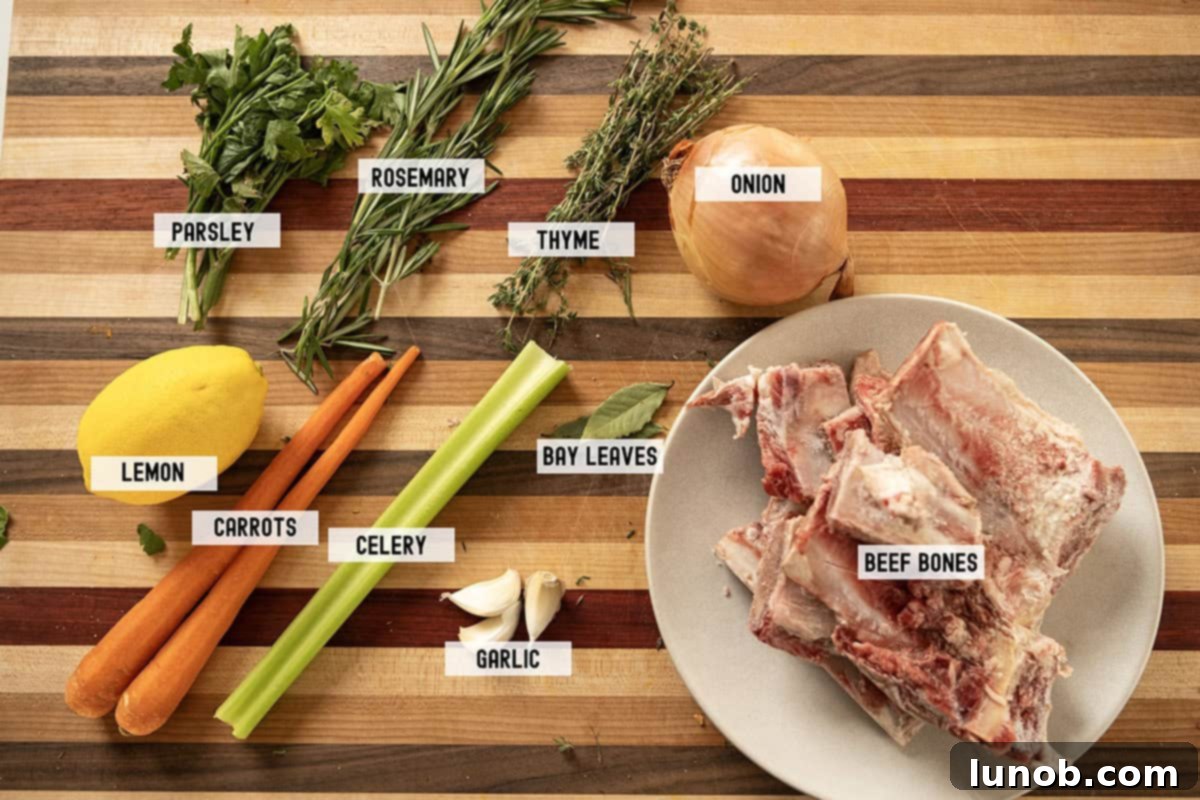
The quality of your ingredients directly impacts the richness and depth of your homemade beef stock. While the recipe calls for specific items, understanding their roles allows for thoughtful substitutions and enhancements.
- Beef Bones: The foundation of a great beef stock lies in high-quality bones. Seek out beef bones that still have a generous amount of meat, marrow, and connective tissue attached. Types like knuckle bones, neck bones, oxtail, or meaty rib bones are excellent choices. The meat remaining on the bones is crucial because it contributes to the rich, caramelized flavor during the roasting process (the Maillard reaction), adding unparalleled depth and savory notes that purely bone-based stock might lack. Marrow bones also release beneficial fats and contribute a silky texture. You can often find a variety of beef bones at your local butcher shop, a specialty meat market, or sometimes even in the frozen section of larger supermarkets. Don’t hesitate to ask your butcher for “soup bones” or “beef bones for stock.”
- Fresh Herbs: Herbs infuse the stock with aromatic complexity and freshness. While personal preference plays a significant role, a classic assortment typically includes rosemary, thyme, parsley, and bay leaves. Rosemary offers a deep, piney aroma; thyme provides an earthy, slightly minty note; parsley adds a fresh, green brightness; and bay leaves contribute a subtle, savory depth. For best results, use fresh herbs tied into a bundle (a bouquet garni) for easy removal. You can also experiment with other herbs like marjoram or even a few sprigs of sage for a different flavor profile.
- Flavorful Vegetables: The traditional “mirepoix” of carrots, celery, and onion forms the sweet and aromatic base for most stocks. Carrots add a natural sweetness and color, celery brings a subtle savory note, and onions provide a foundational allium flavor. These vegetables are ideal because they don’t impart any bitterness or cloudiness. However, homemade stock is also an excellent opportunity to reduce food waste. Feel free to incorporate other leftover vegetable scraps like leek greens, mushroom stems, the tough ends of asparagus, or even potato peels (as long as they are thoroughly scrubbed). Avoid strongly flavored or cruciferous vegetables like broccoli, cabbage, or Brussels sprouts, as they can lead to a bitter or overly vegetal taste in your stock. A small amount of tomato paste can be added during roasting for extra color and umami.
*For detailed quantities and nutritional information, please refer to the comprehensive recipe card located below.
How to Craft Your Own Homemade Beef Stock
Making a deeply flavorful and gelatinous beef stock is a patient process, but each step is straightforward and yields incredibly rewarding results. Follow these instructions to create your own liquid gold.
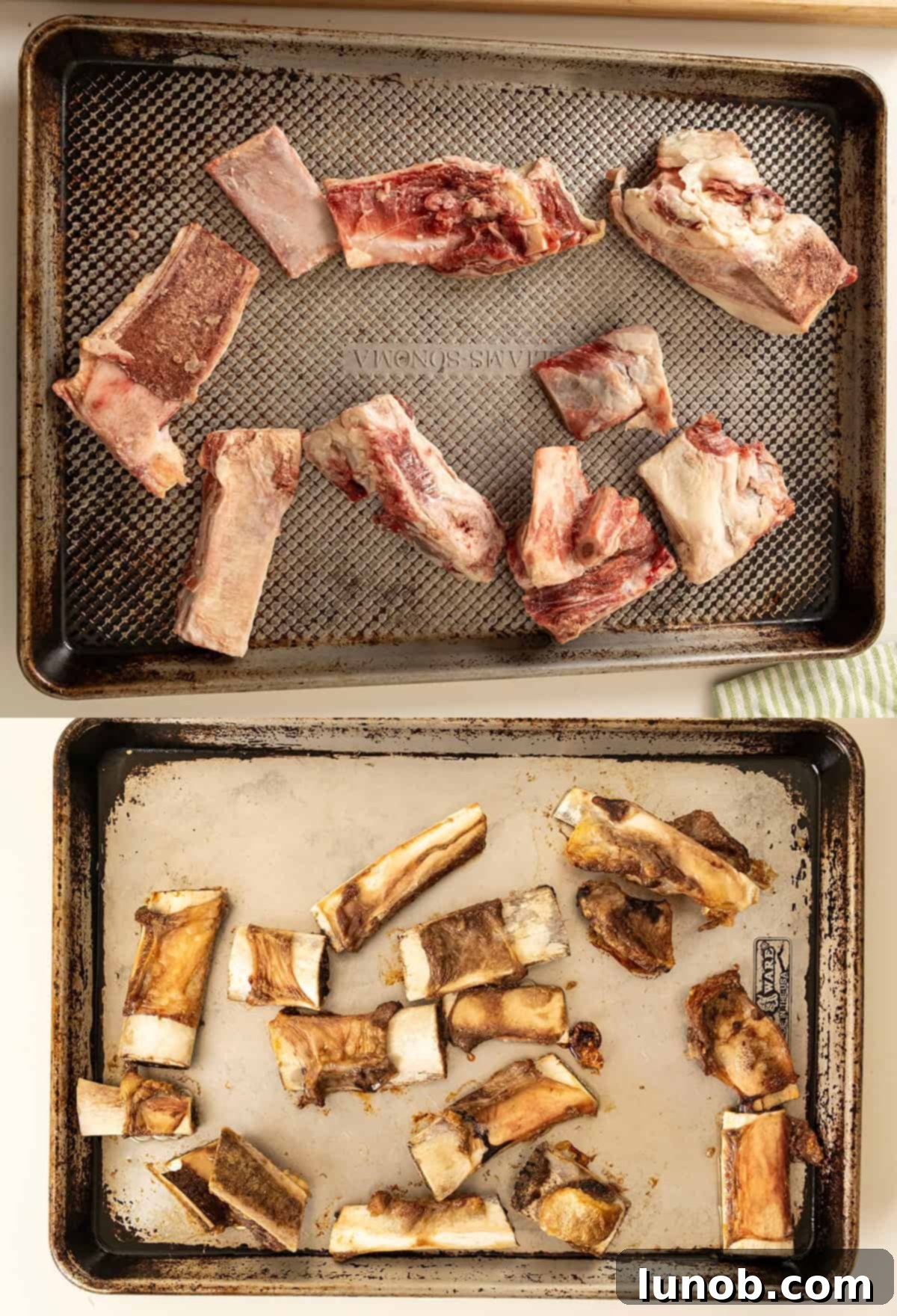
Step 1: Roast the Beef Bones for Deep Flavor. Begin by preheating your oven to a hot 425°F (220°C). Arrange your beef bones evenly in a single layer on a large baking sheet. This ensures maximum surface area for proper browning. Lightly season the bones with a sprinkle of salt and freshly ground black pepper. While the stock itself won’t be salted heavily, this initial seasoning aids in the caramelization process. Roast the bones in the preheated oven for a crucial 45 minutes. Roasting is not just about cooking them; it’s about developing a rich, caramelized crust on the bones and any adhering meat. This Maillard reaction is vital for creating the deep, complex, savory flavor and beautiful amber color of a truly superior beef stock.
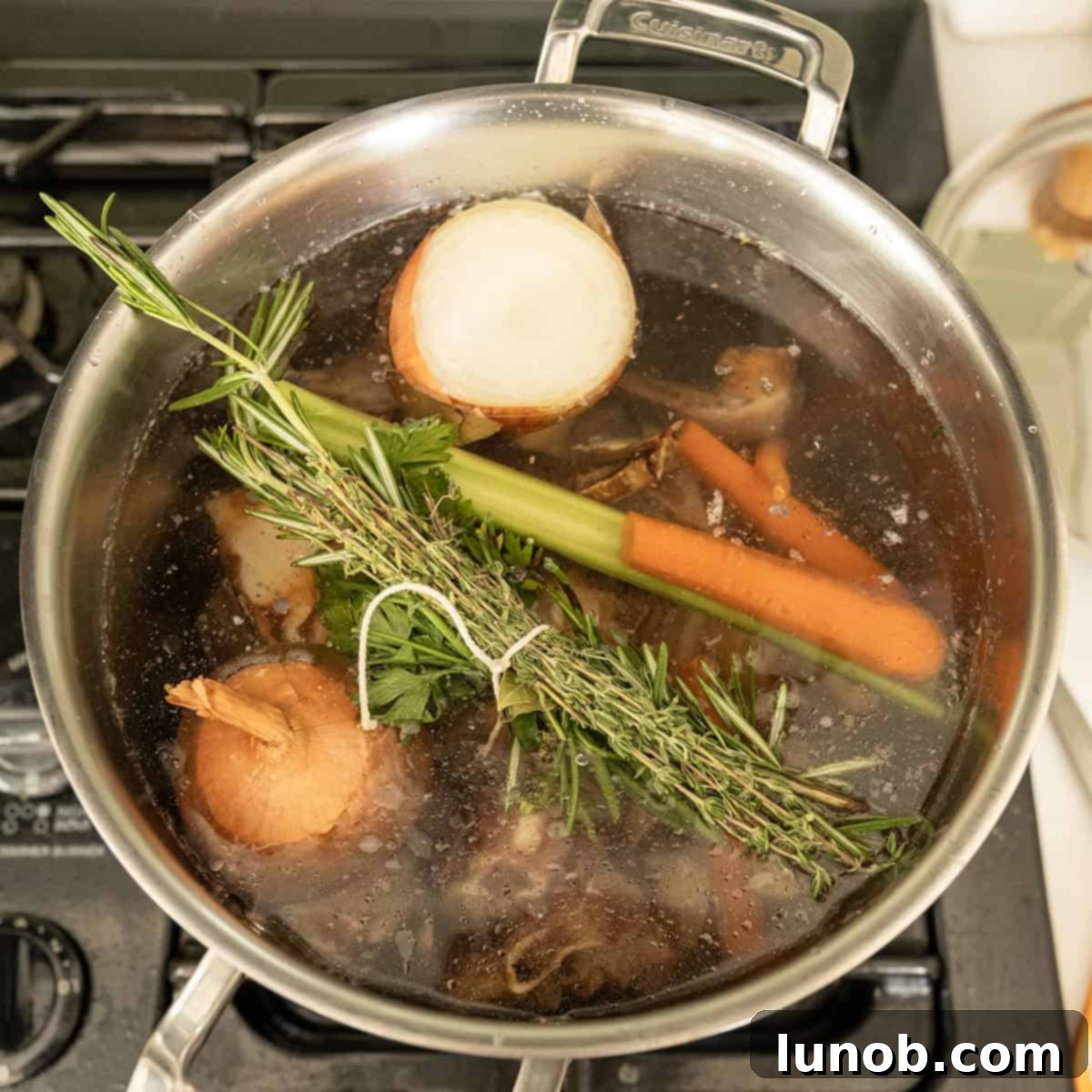
Step 2: Combine Ingredients and Begin the Simmer. Carefully transfer the roasted beef bones from the baking sheet into a very large stockpot or Dutch oven. Add the prepared vegetables: chopped carrots, celery, and onion. Toss in the aromatic elements: bay leaves, fresh thyme, fresh parsley, fresh rosemary, a whole lemon (halved or quartered for better flavor release), and garlic cloves. Once all solid ingredients are in the pot, fill the pot with cold water, ensuring that all the ingredients are fully submerged by at least an inch or two. Avoid overfilling, as this can dilute the flavor. Place the pot on the stovetop and raise the heat to high. Bring the stock to a vigorous boil, then immediately reduce the heat to the lowest possible setting, allowing it to maintain a very gentle simmer. Cover the pot with a lid, slightly ajar to allow some steam to escape. This long, slow simmer is where the magic happens, extracting all the wonderful flavors and collagen.
The simmering duration is critical for flavor concentration and gelatin extraction. For the most concentrated flavor and highest gelatin content, aim to simmer for a full 7-8 hours. This extended period allows the collagen in the beef bones and connective tissues to thoroughly break down into gelatin, providing a rich, viscous stock that will naturally thicken your dishes. If time is a constraint, you can reduce the simmering time to 3-4 hours, but you may need to increase the simmering level slightly to compensate for the shorter duration, ensuring adequate flavor extraction. However, remember that the longer simmer will consistently provide the most profoundly concentrated and flavorful stock, making it worth the wait.
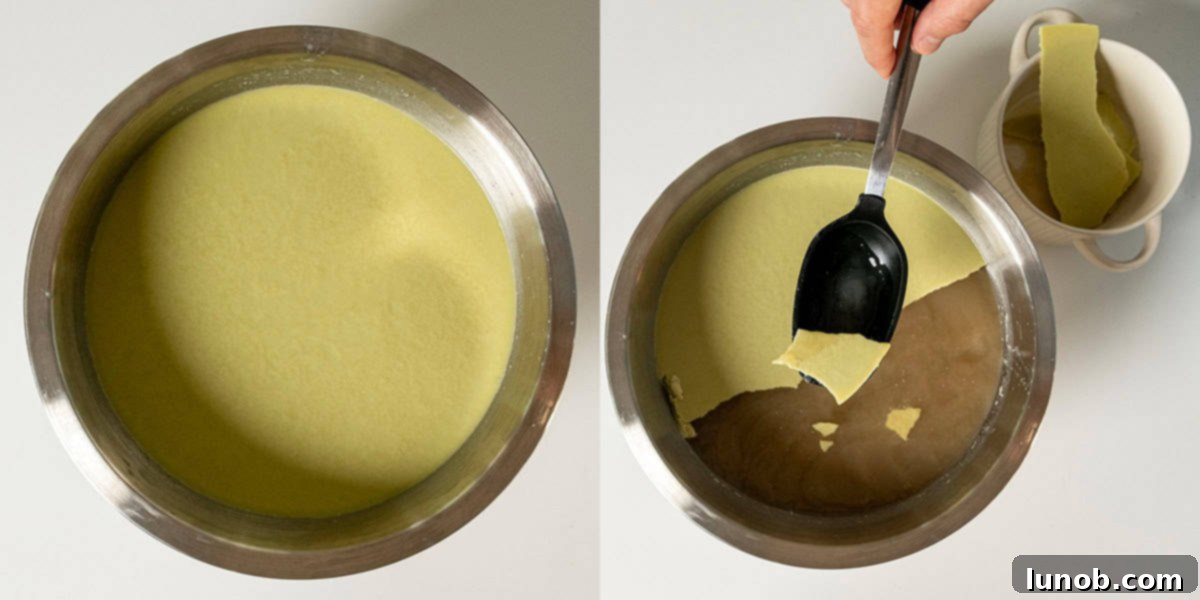
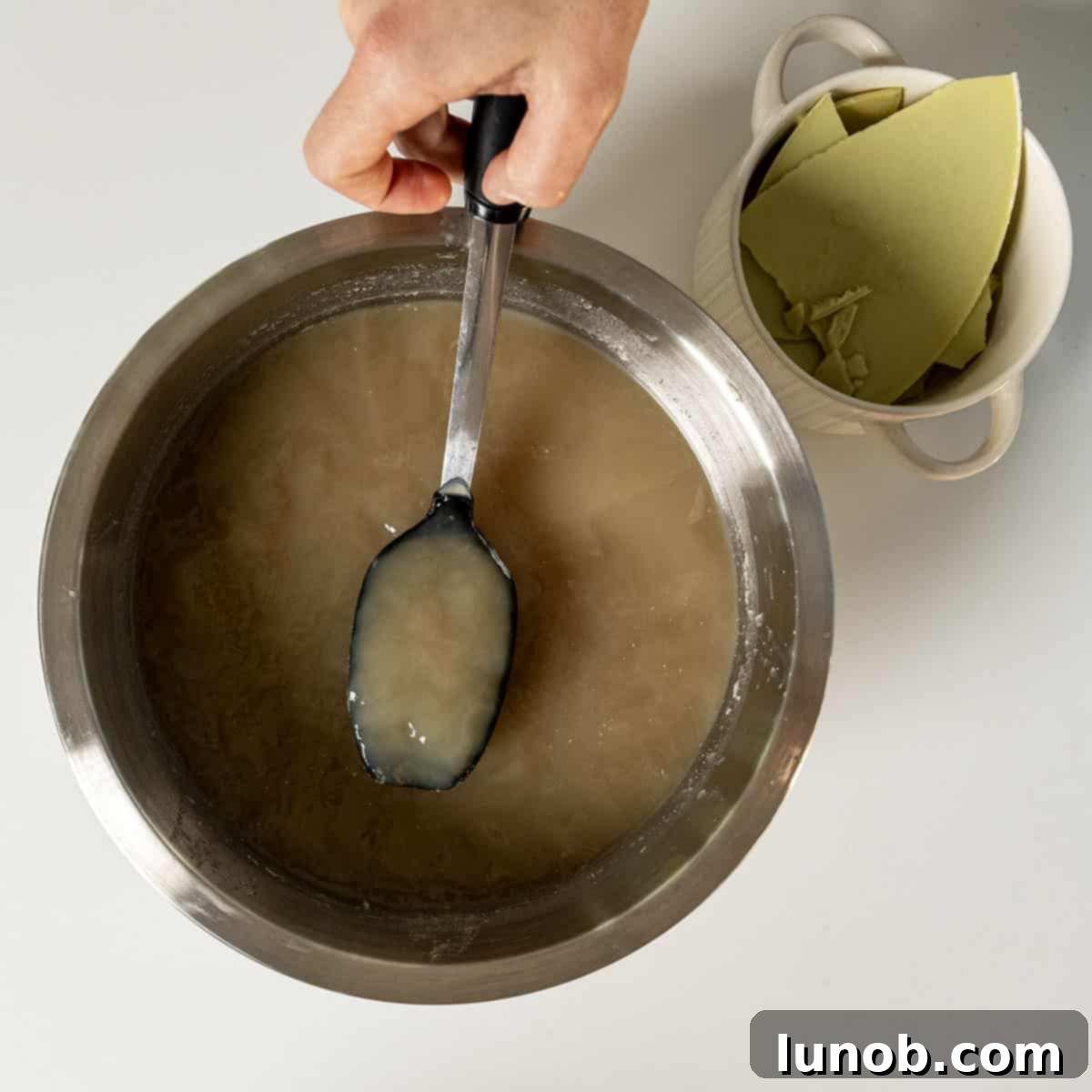
Step 3: Cool, Chill, and Degrease for Clarity. Once the simmering is complete, carefully remove the pot from the heat. Strain the stock through a fine-mesh sieve or a colander lined with cheesecloth into a clean, heatproof container. Discard the spent bones, vegetables, and herbs; they have given all their goodness. Allow the strained stock to cool at room temperature for about an hour before transferring it to the refrigerator. It is essential to refrigerate the stock overnight (or for at least 6-8 hours) until it is thoroughly chilled. During this chilling period, any excess fat will rise to the surface and solidify into a distinct layer. The following day, simply use a spoon or a thin spatula to easily remove and discard this solid layer of fat from the top of the stock. This step not only makes the stock healthier but also results in a clearer, cleaner-tasting product.
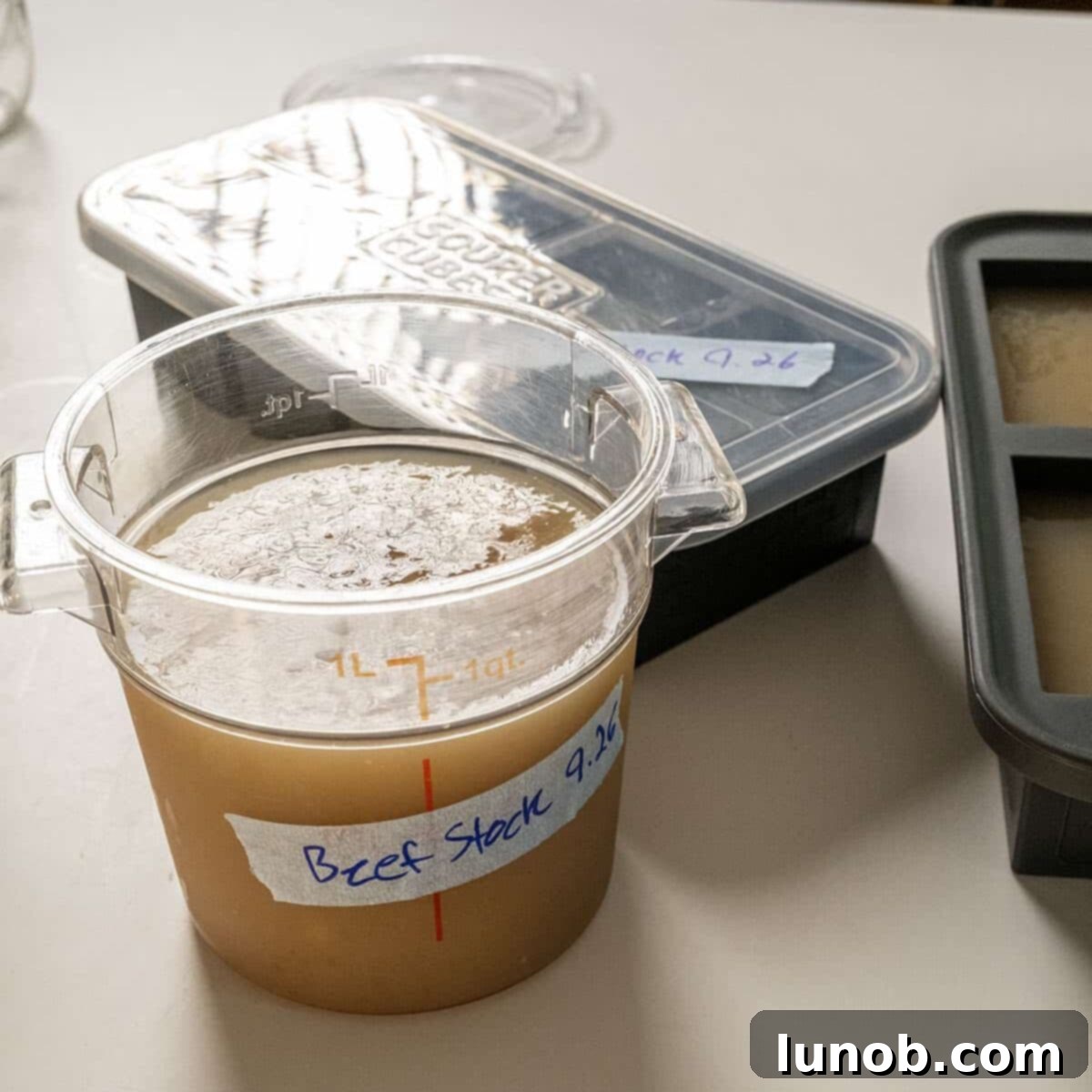
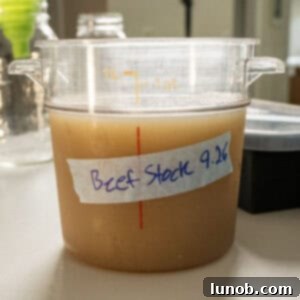
Step 4: Store Your Rich Homemade Stock. After degreasing, your homemade beef stock is ready for storage. It should have a beautiful amber color and, most importantly, be noticeably thick and gelatinous when cold. This gelatinous quality is a clear indicator of successful collagen extraction from the beef bones, promising a rich mouthfeel and natural thickening for your future dishes. You can store the stock in an airtight container in the refrigerator for up to 4 days. For longer storage, freeze it in freezer-safe containers, heavy-duty freezer bags, or even ice cube trays (for small, convenient portions). Frozen beef stock will keep beautifully for up to 6 months, ensuring you have this essential ingredient on hand whenever inspiration strikes. Always label your containers with the date of preparation.
Essential Pro-Tips for Perfect Beef Stock
Elevate your homemade beef stock to professional levels with these insider tips and tricks:
- Prioritize Meaty Bones: The secret to a truly rich and savory beef stock lies not just in the bones themselves, but also in the meat and connective tissue still attached to them. Opt for bones that are visibly meaty, such as oxtail, short ribs, or beef shanks, in addition to marrow bones. The meat undergoes the Maillard reaction during roasting, creating deep, complex flavors that pure bone stock simply cannot achieve. This meaty component is what gives your stock its authentic, robust beef essence.
- Never Skip Roasting the Bones: Roasting the beef bones before simmering is a non-negotiable step for a superior stock. This high-heat exposure caramelizes the exterior of the bones and any attached meat, unlocking a depth of flavor and a beautiful amber color that cannot be developed otherwise. The rich, savory notes developed during roasting are critical for a complex, restaurant-quality stock. Without roasting, your stock will be lighter in color and flavor, lacking that profound richness that defines excellent beef stock.
- Master the Art of the Long, Gentle Simmer: Simmering time is paramount for both flavor concentration and gelatin content. A truly great beef stock requires patience. The longer you allow the bones and aromatics to gently simmer, the more thoroughly the collagen within the bones will break down and transform into gelatin. This gelatin is what gives your stock a luxurious body, a thick texture when chilled, and a velvety mouthfeel when incorporated into soups and stews. Aim for at least 7-8 hours, or even up to 12-24 hours if you have the time and can monitor it safely. A very low, gentle simmer is key to a clear stock; a rolling boil can emulsify fats and lead to cloudiness.
- Implement Smart Storage Practices: Proper storage is just as vital as proper preparation to maximize the lifespan and utility of your homemade stock. After chilling and degreasing, portion your stock into airtight containers. For versatility, freeze some in ice cube trays for small additions to sauces, and larger portions in freezer-safe bags or containers for soups and stews. Ensure containers are filled to leave headspace for expansion if freezing. Label with the date to keep track. Stored correctly in the freezer, your rich homemade beef stock will last for up to 6 months, providing you with a high-quality cooking essential throughout the entire winter season and beyond, ready to transform any meal.
Common Questions About Homemade Beef Stock
The primary reason for omitting salt when making stock is to give you complete control over the seasoning of your final dish. Stock is often simmered for many hours and can be reduced significantly in various recipes. If salt were added to the stock initially, its concentration would increase dramatically during reduction, potentially leading to an overly salty and unusable base. By keeping the stock unsalted, you can adjust the seasoning precisely for the specific soup, sauce, or braise you are preparing, ensuring perfect flavor balance every time without the risk of over-salting early on.
Homemade stock boasts several significant advantages over most store-bought options. Most notably, it’s rich in natural collagen, which breaks down into gelatin during the long simmering process. This gelatin provides a natural body and luxurious mouthfeel, acting as an excellent thickener for dishes like beef stew, goulash, or bolognese without the need for additional starches. Store-bought stocks often lack this natural gelatin and frequently contain artificial flavors, excessive sodium, and preservatives, which compromise both taste and health benefits. Homemade stock is pure, authentic, and naturally superior in flavor and texture.
While the terms are sometimes used interchangeably, the main distinction lies in their ingredients and preparation. Beef stock is typically made primarily from roasted bones and connective tissues, often with some meat, and is simmered for a long time to extract collagen, resulting in a gelatinous texture when cooled. Crucially, stock is almost always cooked without salt. Beef broth, on the other hand, is generally made from meat (with or without some bones), vegetables, and aromatics, often simmered for a shorter period. It is seasoned with salt during its preparation, intended to be consumed as a standalone beverage or a lighter base. The absence of salt in stock provides greater culinary flexibility.
Contrary to popular belief, frequent skimming throughout the simmering process isn’t always necessary for achieving clear stock, and it can even disturb the gentle simmer you’re trying to maintain. My preferred method is to simply allow the stock to simmer undisturbed. After the stock has finished cooking and has been strained, I let it cool completely before transferring it to the refrigerator overnight. Once thoroughly chilled, all the excess fat and any remaining impurities will solidify and rise to the very top, forming a distinct, easy-to-remove layer. This method effectively degreases and clarifies the stock in one simple step, without constant attention during cooking.
Yes, absolutely! Both slow cookers and pressure cookers are excellent tools for making homemade beef stock, offering convenience and slightly different results. A slow cooker allows for an even longer, gentler simmer with minimal supervision, often yielding a very clear stock. You can set it and let it go for 12-24 hours. A pressure cooker significantly reduces the cooking time, often transforming bones into gelatinous stock in just 2-3 hours under high pressure. While the pressure cooker is faster, some argue that the depth of flavor is slightly less complex than a long stovetop simmer, but it still produces a fantastic, gelatinous stock, especially when time is a factor. Remember to adjust liquid amounts for pressure cooking to prevent overfilling and ensure safety.
More Delicious Homemade Essentials
If you love the satisfaction and superior flavor of homemade ingredients, explore these other essential recipes that will elevate your cooking:
- Homemade Italian Parmesan Croutons
- Traditional Caesar Dressing
- Homemade Italian Sausage Seasoning
- Ricotta Filling
Please leave a comment and star rating below in the recipe card! We love to hear what you think of our recipes and how they turn out in your kitchen. Feel free to tag us on Instagram @vindelgiudice to share your culinary creations!
📖 Recipe
Homemade Beef Stock
Vincent DelGiudice
Pin Recipe
Equipment
-
1 large stock pot
Ingredients
- 2 lbs beef bones
- 2 carrots
- 1 celery stalk
- 3 garlic cloves
- 2 bay leaves
- 1 large onion
- 1 lemon
- 1 bunch fresh rosemary
- 1 bunch fresh thyme
- 1 bunch fresh parsley
Instructions
-
Preheat oven to 425℉ (220°C). Place beef bones evenly on a baking sheet. Season lightly with salt and pepper. Roast in the oven for 45 minutes until deeply caramelized.
-
Transfer roasted beef bones to a large stockpot. Add carrots, celery, onion, bay leaves, thyme, parsley, rosemary, lemon, and garlic. Fill the pot with cold water to cover all ingredients by at least one inch. Bring to a boil over high heat.
-
Once boiling, reduce heat immediately to a very low simmer. Cover the pot, leaving the lid slightly ajar, and simmer gently for 7-8 hours for maximum flavor and gelatin extraction. For a quicker option, simmer for 3-4 hours at a slightly higher, but still gentle, simmer.
-
Strain the stock through a fine-mesh sieve into a clean container, discarding solids. Allow to cool completely, then refrigerate overnight. The next day, remove and discard the solidified layer of fat from the top. Store chilled stock for up to 4 days in the refrigerator or freeze for up to 6 months.
Notes
- Find beef bones that still have some meat left on the bone. This is crucial for developing a rich, caramelized, and truly authentic beef flavor through the roasting process. Pure bones yield a less flavorful stock.
- Roasting the bones is an indispensable step. It initiates the Maillard reaction, which is essential for creating the deep, savory, and caramelized flavor profile that distinguishes exceptional beef stock from a plain broth.
- Simmer time is paramount to both the depth of flavor and the gelatin content of your stock. A longer, slow simmer (7-8 hours or more) allows more collagen to cook out of the bones and transform into gelatin. This results in a stock that appears bouncy and thick when cold, providing a rich mouthfeel and natural thickening power for your culinary creations.
- Storing the stock correctly ensures its longevity and readiness for use. After cooling and degreasing, divide your stock into convenient portions. It can be refrigerated for up to 4 days or frozen for up to 6 months, making it an invaluable, homemade staple to enjoy throughout the colder months.