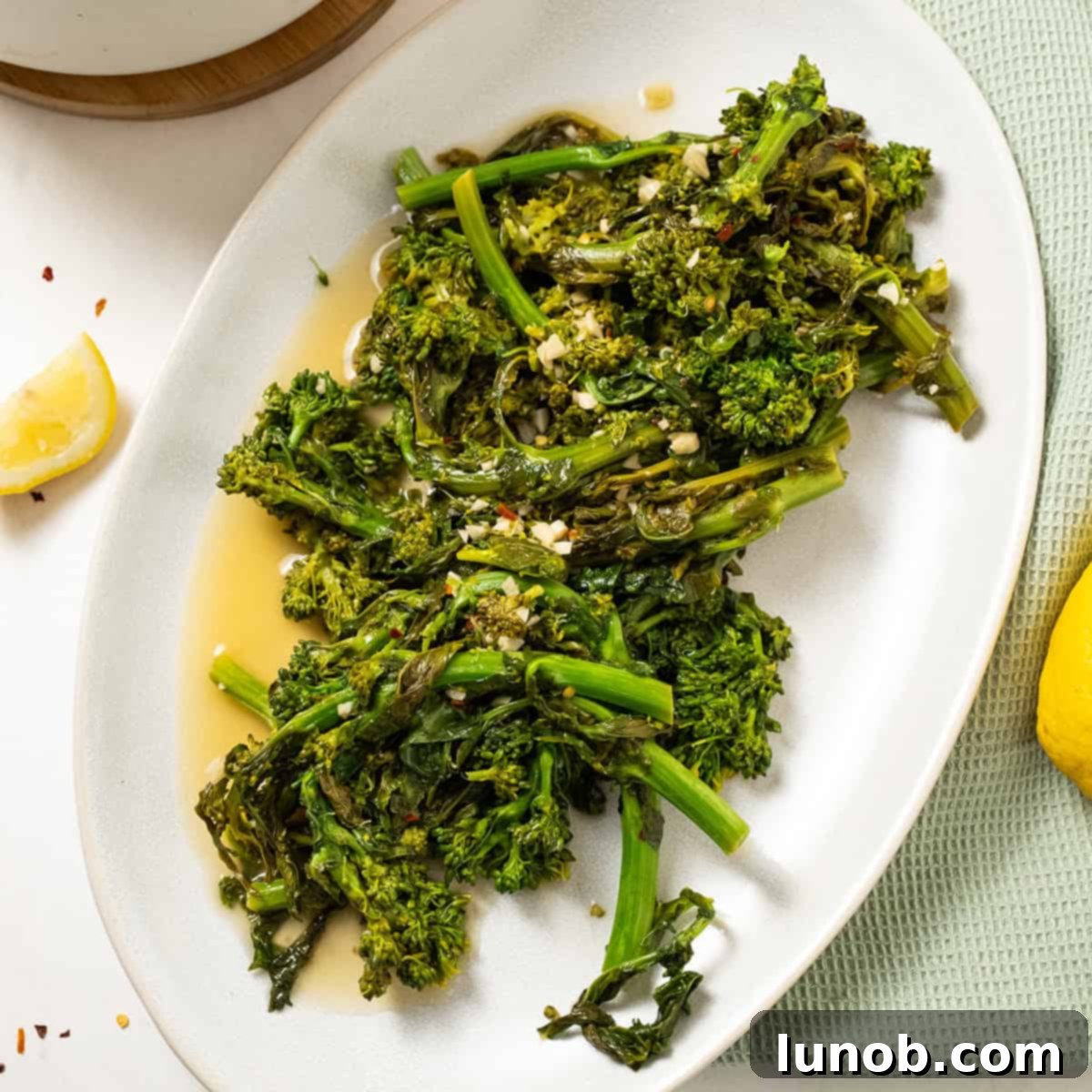
Savory Sauteed Rapini with Garlic and Lemon: An Essential Italian Side Dish (Broccoli Rabe Recipe)
This incredibly easy recipe transforms fresh rapini with garlic into a delightful side dish, a flavorful sandwich topping, or even a satisfying cold snack. Also known as broccoli rabe, this vibrant green vegetable boasts a distinct and wonderfully unique flavor that is truly unparalleled. If you’ve never experienced its robust taste, you’re genuinely missing out on a staple of authentic Italian cuisine!
Perfectly complementing a range of main courses, this sauteed rapini recipe elevates any meal. Consider serving it alongside our Pesto Stuffed Chicken for a sophisticated touch, or pair it with Classic Italian Fried Meatballs for a truly traditional and hearty Italian spread. Its versatility makes it a beloved component in many culinary traditions.
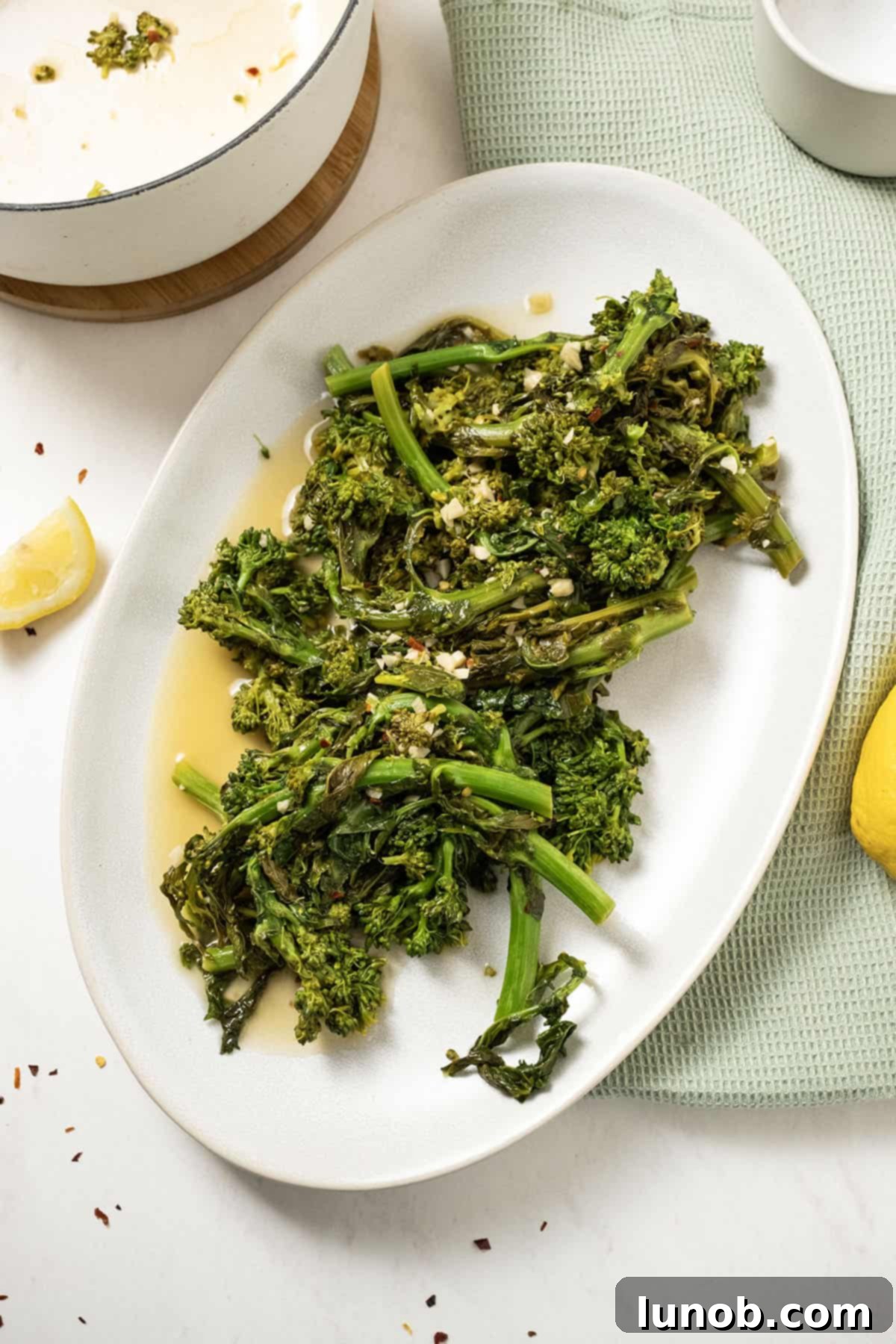
For those seeking more authentic Italian vegetable accompaniments, be sure to explore our delightful Italian Green Bean Salad or our crisp and refreshing Traditional Caesar Salad.
Embracing the Unique Flavor of Broccoli Rabe (Rapini)
Rapini, affectionately known as broccoli rabe, holds a special place in my heart as my absolute favorite vegetable. I vividly recall my graduate school days, receiving guidance over the phone from my grandma, who patiently walked me through this very recipe and taught me how to prepare her famous Pasta with Sausage and Broccoli Rabe. It’s a flavor that evokes warmth, tradition, and a deep appreciation for simple, quality ingredients.
If you’re new to the world of broccoli rabe, prepare your palate for a truly distinct experience. The signature bitter undertone of properly sauteed rapini with garlic isn’t a flaw; it’s a celebrated characteristic. While many tend to shy away from bitterness, our taste buds are equipped with receptors specifically designed to detect and appreciate it. When cooked just right, this bitterness transforms into a delightful pungency, balanced beautifully by the sharpness of garlic and the brightness of lemon. It’s an immensely enjoyable vegetable, whether served piping hot or as a refreshing cold snack. Its robust, earthy flavor shares a humble, delicious simplicity akin to Escarole and Bean Soup.
Achieving the perfect texture is crucial for rapini, much like with eggplant. Just as eggplant in dishes like Pasta alla Norma demands precise slicing and frying, rapini requires a careful balance of sautéing and steaming. Overcooked rapini can become mushy and unappealing, while undercooked stalks can be overly fibrous. The goal is a tender yet slightly crisp texture, where the leaves are soft and infused with flavor, and the stalks retain a satisfying bite.
Why This Sauteed Rapini Recipe Will Become Your Go-To
This Sauteed Rapini with Garlic and Lemon recipe is more than just a side dish; it’s a testament to how simple ingredients, when handled with care, can yield extraordinary results. Here’s why this recipe deserves a permanent spot in your culinary repertoire:
- Effortlessly Quick & Easy: From start to finish, this dish comes together in under 20 minutes. It’s perfect for busy weeknights when you need a nutritious and flavorful accompaniment without spending hours in the kitchen. The straightforward steps make it accessible for cooks of all skill levels.
- Remarkably Versatile: Beyond being a stellar side dish, this rapini is fantastic on its own as a light vegetarian snack. Pile it high on crusty bread for a delicious sandwich, or incorporate it into pasta dishes, frittatas, and even pizzas. Its robust flavor stands up well to various applications.
- Healthy & Nutritious: Rapini is a powerhouse of vitamins (A, C, K), minerals, and fiber. It’s a low-calorie, nutrient-dense vegetable that supports overall well-being. Cooking it simply with olive oil and garlic helps retain its health benefits, making it a smart choice for a balanced diet.
- Authentic Italian Flavors: This recipe embodies the essence of Italian home cooking. The combination of pungent rapini, aromatic garlic, spicy red pepper, and bright lemon juice creates a symphony of flavors that is truly Mediterranean and satisfying. It’s a taste of Italy right in your kitchen.
- Minimal Ingredients, Maximum Impact: You don’t need a long list of exotic ingredients to create something truly delicious. This recipe focuses on a few high-quality components that shine through, proving that sometimes, less is indeed more.
Essential Ingredients for Flawless Sauteed Rapini
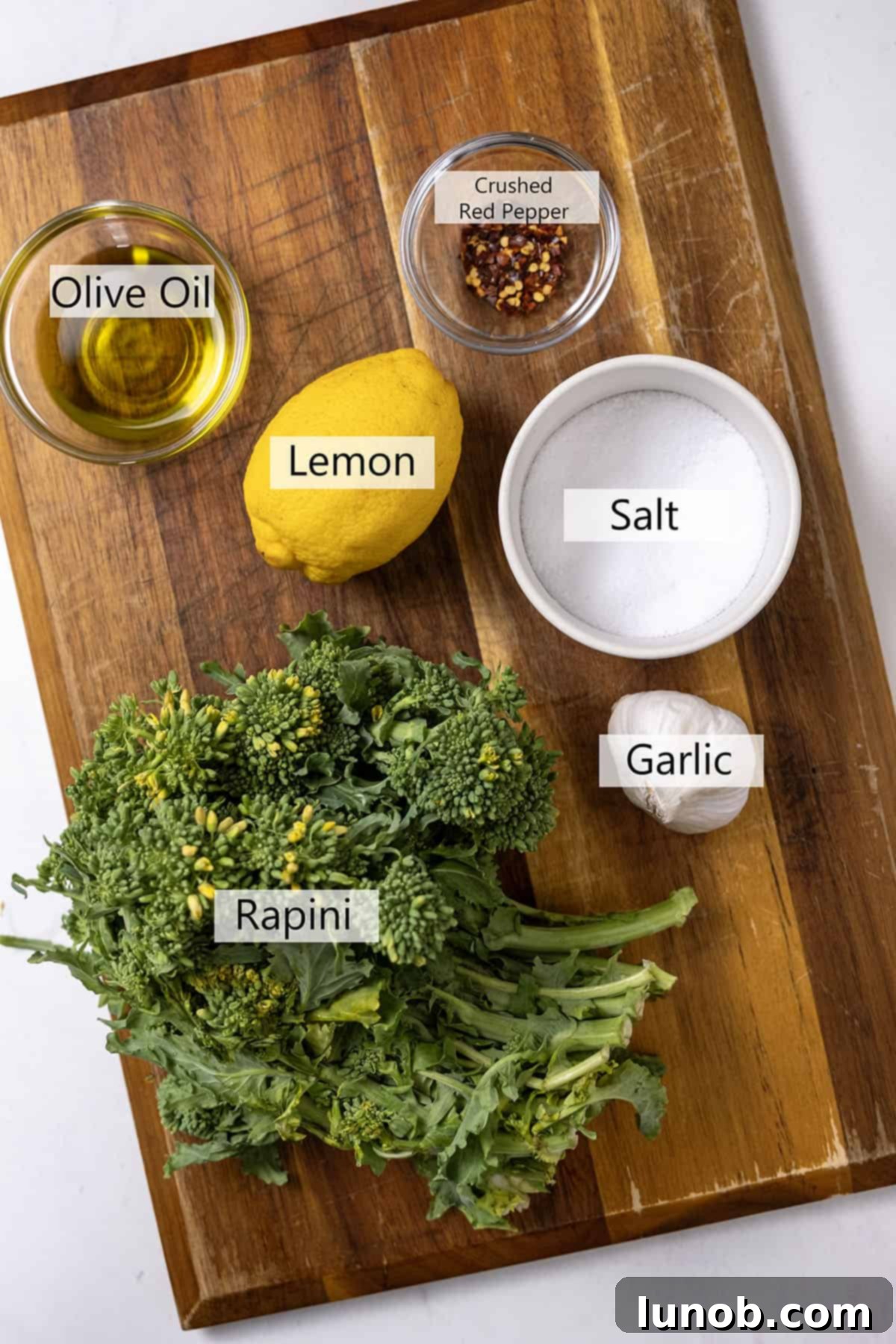
Crafting the perfect sauteed rapini requires attention to a few key ingredients. Here’s a closer look at what you’ll need and how to select them:
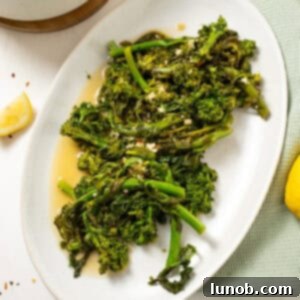
- Rapini (Broccoli Rabe): This is, of course, the star of our dish. When selecting rapini, always aim for a vibrant green bushel. Look for leaves and florets that are firm and crisp, with minimal yellowing. While a little yellowing on the florets can sometimes be unavoidable, as seen in the image above, prioritize freshness. Before cooking, always chop off the tough, fibrous ends of the stalks. These ends tend to be very bitter and woody, and removing them ensures a more pleasant eating experience.
- Olive Oil: I cannot emphasize this enough in any of my Italian recipes: the quality of your olive oil is paramount, especially in dishes like this where it plays such a central role in flavoring. A good extra virgin olive oil will impart a rich, fruity, and slightly peppery note that will permeate every bite of the rapini, creating a truly authentic Italian taste. Skimping on olive oil quality will noticeably diminish the depth of flavor in your final dish.
- Garlic: Fresh garlic is non-negotiable here. Avoid pre-minced garlic in jars, as its flavor profile is significantly weaker and often metallic. Use whole garlic cloves, finely minced, to release their potent, aromatic oils. Garlic forms the foundational flavor of this dish, so fresh is best.
- Crushed Red Pepper Flakes: These add a subtle warmth and a touch of Italian flair to the rapini. Adjust the amount to your preference – a teaspoon provides a gentle background heat, while more will kick up the spice.
- Lemon: Freshly squeezed lemon juice is critical for balancing the natural bitterness of the rapini. It adds a bright, zesty acidity that cuts through the richness of the olive oil and harmonizes with the garlic. Always use a fresh lemon for the best flavor.
- Water: A small amount of water is used to help steam the rapini, tenderizing it without boiling away its essential flavors and nutrients. It also helps create a light “sauce” with the olive oil and garlic.
- Salt: Essential for seasoning and bringing out all the flavors. I typically use fine sea salt or Kosher salt. Season to taste throughout the cooking process.
*Please note that precise measurements for these ingredients can be found in the detailed recipe card provided below.
Exploring Substitutes for Broccoli Rabe (Rapini)
While rapini’s flavor is truly unique, there are indeed other leafy green vegetables that can be substituted in a sautéed preparation. However, it’s crucial to understand that these are *substitutions*, and they will not replicate the distinctive bitter and pungent flavor profile that makes rapini so special. Each substitute offers its own taste and texture, leading to a different culinary experience:
- Mustard Greens: These can serve as a substitute for rapini in this recipe, but be aware that mustard greens bring a notable spicy and peppery kick alongside their bitterness. This means your dish will have a more assertive, hot flavor profile than with traditional rapini. It will definitely be a different, albeit still delicious, experience.
- Collard Greens: Personally, collard greens are among my least favorite vegetables when aiming for a rapini likeness. While they possess a slightly bitter flavor, their overall profile strongly resembles cabbage. They belong to the same plant species as broccoli and cabbage, which explains their tougher texture and less pungent flavor compared to rapini. They require longer cooking times to become tender.
- Swiss Chard: Swiss chard offers a texture somewhat similar to broccoli rabe, particularly its stems. However, its flavor is distinctly different, leaning towards sweet and earthy with significantly less bitterness than rapini. If you prefer a milder green, Swiss chard could be an option, but it won’t provide the characteristic punch of broccoli rabe.
- Broccolini: Often confused with broccoli rabe, broccolini is actually a hybrid cross between regular broccoli and Chinese broccoli. Despite a visual resemblance with its long, tender stalks, it shares almost nothing in common with rapini in terms of flavor. Broccolini is much milder, sweeter, and more closely resembles a tender version of classic broccoli. It lacks rapini’s signature bitterness entirely.
- Broccoli: Classic broccoli is simply too distinctly different from rapini to be considered a true substitute. People frequently ask if it can be used interchangeably, but the reality is that rapini offers an extremely unique and intense flavor that very few vegetables can actually mimic. Broccoli is cruciferous, but its florets and stalks have a completely different texture and a much sweeter, less complex taste.
In summary, while you can technically use other greens, none will truly capture the essence and depth of flavor that rapini brings to a dish. For an authentic experience, fresh rapini is always the preferred choice.
Step-by-Step: How to Make Sauteed Rapini with Garlic
This recipe is designed for efficiency, taking less than 15 minutes from the moment you start prepping to when you’re ready to serve. For optimal heat distribution and even cooking, I highly recommend using a dutch oven or a heavy-bottomed pot.
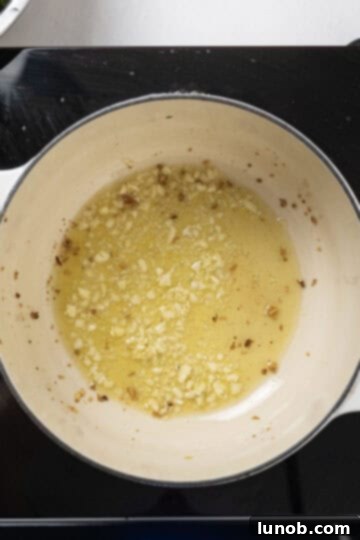
Step 1: Prepare the Rapini and Sauté the Aromatics. Begin by thoroughly cleaning your rapini. Chop off the tough, woody ends of the stalks, then rinse the remaining green stalks and florets under cold water. After rinsing, shake off excess water or pat dry. In your dutch oven or large pot, add the quality olive oil and place it over medium heat. Once the oil is shimmering, stir in the minced garlic. Sauté for 1-2 minutes, stirring continuously, until the garlic becomes fragrant and lightly golden. Be careful not to burn it.
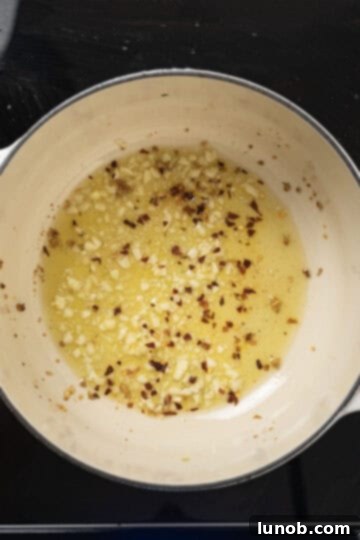
Step 2: Infuse with Heat. Add the crushed red pepper flakes to the pot with the garlic and oil. Continue to sauté for another 30 seconds to a minute. This brief cooking time allows the red pepper to bloom in the hot oil, releasing its aromatic and spicy compounds, which will infuse the entire dish with a pleasant warmth.
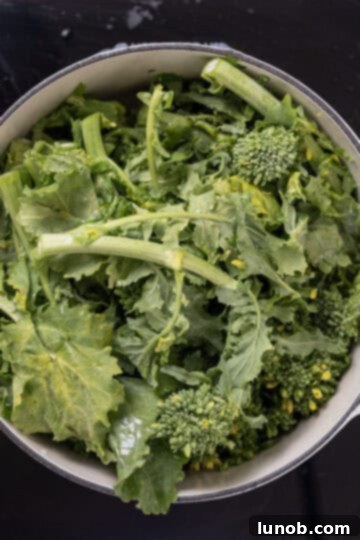
Step 3: Sauté and Steam for Tenderness. Carefully add the prepared rapini to the pot. Using tongs or a spoon, stir it thoroughly, ensuring all the rapini is well coated with the garlic-infused olive oil and red pepper. Pour in the specified amount of water, then immediately cover the pot with a tight-fitting lid. Let the rapini steam and cook for 5 minutes. This steaming process helps to tenderize the stalks and florets efficiently, creating a soft yet still slightly firm texture.
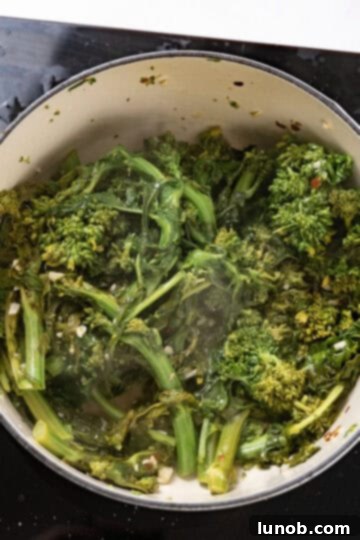
Step 4: Finish and Serve. After 5 minutes, remove the cover from the pot. Stir the rapini again, ensuring it’s evenly coated in the flavorful liquid that has formed. Continue to sauté for another 2-3 minutes, uncovered, allowing any excess water to evaporate and the rapini to soften further. The goal is for the leaves to be tender, but the stalks should still retain a slight crispness – not mushy. Finally, squeeze in the fresh lemon juice, stir one last time to distribute, and remove the sauteed rapini from the heat. Serve immediately and enjoy!
Expert Tips for Perfect Sauteed Rapini
- Handle Lemon Juice with Care: Once you’ve squeezed in the lemon juice, serve the sauteed rapini fairly quickly. Don’t let the rapini sit in the pot with the lemon juice for too long after cooking, as the acid can cause the delicate leaves to brown, affecting their appearance.
- Mastering Garlic Sautéing: Always sauté your garlic over a controlled medium-low to medium heat. Garlic burns very quickly, and burnt garlic will impart a bitter, unpleasant taste to your entire dish. Stir it frequently and watch it closely. Similarly, once you add the broccoli rabe and water, stir everything together thoroughly. If all the minced garlic remains at the bottom of the pan, it’s more likely to scorch.
- Don’t Overcrowd the Pan: If you’re doubling the recipe or using a smaller pot, consider cooking the rapini in batches. Overcrowding the pan lowers the temperature, leading to steaming instead of sautéing, and can result in soggy rapini rather than tender-crisp.
- Season in Layers: Don’t just add salt at the end. Season the garlic and oil slightly, and then add a pinch more when the rapini is introduced. This builds flavor throughout the dish.
- Adjusting Bitterness (Optional Blanching): While the bitterness of rapini is a cherished characteristic, if you are particularly sensitive to it, you can blanch the rapini in boiling salted water for 1-2 minutes before sautéing. Immediately plunge it into an ice bath to stop cooking, then drain thoroughly. This process can reduce some of the bitterness, though it may also slightly diminish the rapini’s unique pungent and nutty notes that many, including myself, enjoy.
- Texture is Key: Pay close attention during the final sautéing stage. You want the rapini to be tender enough to bite through easily, but the stalks should still have a slight “al dente” resistance. This ensures it’s cooked through without being mushy.
Common Questions About Sauteed Rapini (Broccoli Rabe)
Broccoli rabe and rapini are two different names for the exact same vegetable. They are used interchangeably. Broccolini, however, is a distinct vegetable; it’s a cross between regular broccoli and Chinese broccoli. While it has long, slender stems somewhat resembling rapini, broccolini is much more tender, sweeter, and significantly less bitter than rapini.
Rapini has a distinctive, pungent, and slightly bitter flavor, often described as peppery and earthy. It’s more assertive than spinach or traditional broccoli. This unique bitterness is one of its most celebrated characteristics, especially in Italian cooking, where it is often balanced and enhanced by the sweetness of garlic, the acidity of lemon, and sometimes a hint of spicy red pepper.
If you find the natural bitterness of rapini too intense, you can blanch it first before sautéing. To do this, quickly boil the rapini in salted water for 1-2 minutes, then immediately transfer it to an ice bath to stop the cooking, and drain thoroughly. While this method can temper the bitterness, it’s worth noting that it might also reduce some of the rapini’s desirable nutty and pungent notes. Many culinary enthusiasts, myself included, truly enjoy the distinctive bitter punch of broccoli rabe and feel that blanching takes away from its authentic flavor.
Yes, you can prepare sauteed rapini a day or two in advance. Store it in an airtight container in the refrigerator. When reheating, gently warm it on the stovetop over low heat or in the microwave. Keep in mind that the texture might soften slightly upon reheating, but the flavors will still be delicious.
Absolutely! Rapini is incredibly nutritious. It’s rich in vitamins A, C, and K, as well as essential minerals like calcium, iron, and potassium. It’s also a good source of dietary fiber, which aids digestion. Its high antioxidant content contributes to overall health and wellness, making it a fantastic addition to any diet.
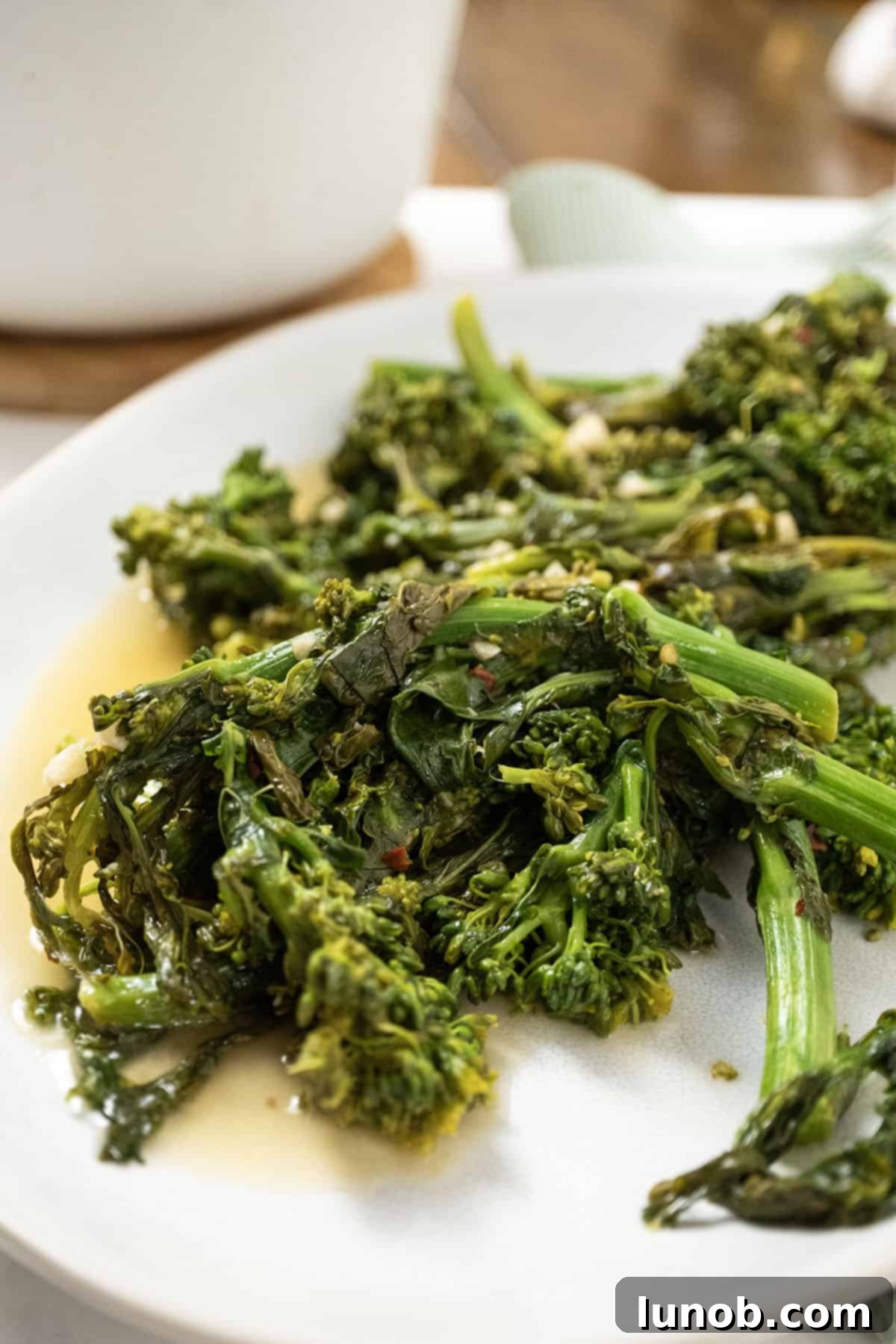
Perfect Pairings: What to Serve with Sauteed Rapini
This versatile vegetable dish is a cornerstone of Italian cuisine and pairs beautifully with an extensive array of classic Italian meals and beyond. Its robust flavor profile makes it an excellent companion to both rich and lighter dishes.
- With Poultry: It pairs exceptionally well with virtually every chicken dish. Imagine its savory bitterness cutting through the richness of Cast Iron Chicken Breast, complementing the delicate lemon notes of Chicken Francese, or adding depth alongside the prosciutto and sage of Chicken Saltimbocca.
- For Your Sunday Meal: Sauteed rapini is an indispensable part of a traditional Italian Sunday dinner. Serve it on the side of a slow-simmered, rich Authentic Bolognese, alongside tender Italian Braciole, or as a vibrant counterpoint to a hearty Authentic Italian Sunday Sauce.
- Alongside Seafood: The bright, garlicky flavors of rapini beautifully enhance fresh seafood. It’s fantastic with flaky Fried Flounder Oreganata, succulent Pan-Seared Vermillion Snapper, or the crunchy texture of Pistachio Crusted Fish.
- As a Sandwich Filling: Don’t limit rapini to just the plate! It’s an incredible addition to sandwiches, offering a burst of flavor and texture. Try it layered in an Eggplant Parm Sandwich, as a savory element in The Italian Breakfast Sandwich, or with a classic Peppers and Eggs Sandwich.
- With Pasta: While it’s fantastic *in* pasta, it’s also a wonderful side to many pasta dishes. Enjoy it alongside a rustic Pasta with Cauliflower, a creamy Creamy Red Pepper Sauce, or the bold flavors of Classic Linguine Alla Puttanesca.
Whether you’re hosting a feast or enjoying a simple meal, sauteed rapini adds an authentic Italian touch that is both flavorful and satisfying.
Video Recipe
More Italian Vegetable Delights
- Easy Steamed Artichokes
- Italian Cabbage Recipe
- Escarole and Bean Soup
- Italian Lacinato Kale Recipe (Tuscan)
Please leave a comment and star rating below in the recipe card! I love to hear what you think of our recipes. Feel free to tag us on Instagram @vindelgiudice.
📖 Recipe
Sauteed Rapini with Garlic
By Vincent DelGiudice
Rapini is a classic Italian vegetable sauteed with garlic and lemon. Also called broccoli rabe, this vegetable is known for its distinctive bitterness and intense flavor, making it a perfect, quick side dish.
Pin Recipe
Equipment
- 1 dutch oven or large pot
Ingredients
- 3 tablespoon olive oil
- 1 head rapini (broccoli rabe)
- 4 cloves garlic, minced
- 1 teaspoon crushed red pepper
- ½ lemon, juiced
- 3 tablespoon water
- 1 teaspoon salt
Instructions
- Chop off the ends of the rapini, rinse, and strain. In a dutch oven, add the olive oil over medium heat. Stir in the garlic and saute for 1-2 minutes or until fragrant.
- Add the crushed red pepper and saute for another 30 seconds to a minute. Add the rapini and stir well. Add the water and cover the pot for 5 minutes.
- Remove the cover and stir until the rapini is covered in the sauce. Continue to saute for another 2-3 minutes or until the rapini has softened but the stalks remain slightly stiff. Squeeze in the lemon juice. Remove and serve.
Notes
- Make sure to stir the rapini well when you first add it to the pot. The lemon will brown the leaves if you let it sit too long.
- Rapini is known for its bitterness. If you don’t like that flavor, overcooking the recipe won’t make it better. It’s supposed to have a slight bitter flavor.
Nutrition
Calories: 103 kcal | Carbohydrates: 3g | Protein: 0.4g | Fat: 11g | Saturated Fat: 1g | Polyunsaturated Fat: 1g | Monounsaturated Fat: 8g | Sodium: 591mg | Potassium: 41mg | Fiber: 1g | Sugar: 0.4g | Vitamin A: 158IU | Vitamin C: 8mg | Calcium: 12mg | Iron: 0.3mg
Tried this recipe? We’d love for you to Leave a Review!